Deck & Patio Cleaning in Cumming, GA
Safely remove mold, mildew, algae, and years of grime from wood decks, composite decking, concrete patios, pavers, and stone surfaces.
Why Decks and Patios in Cumming Get Dirty So Fast
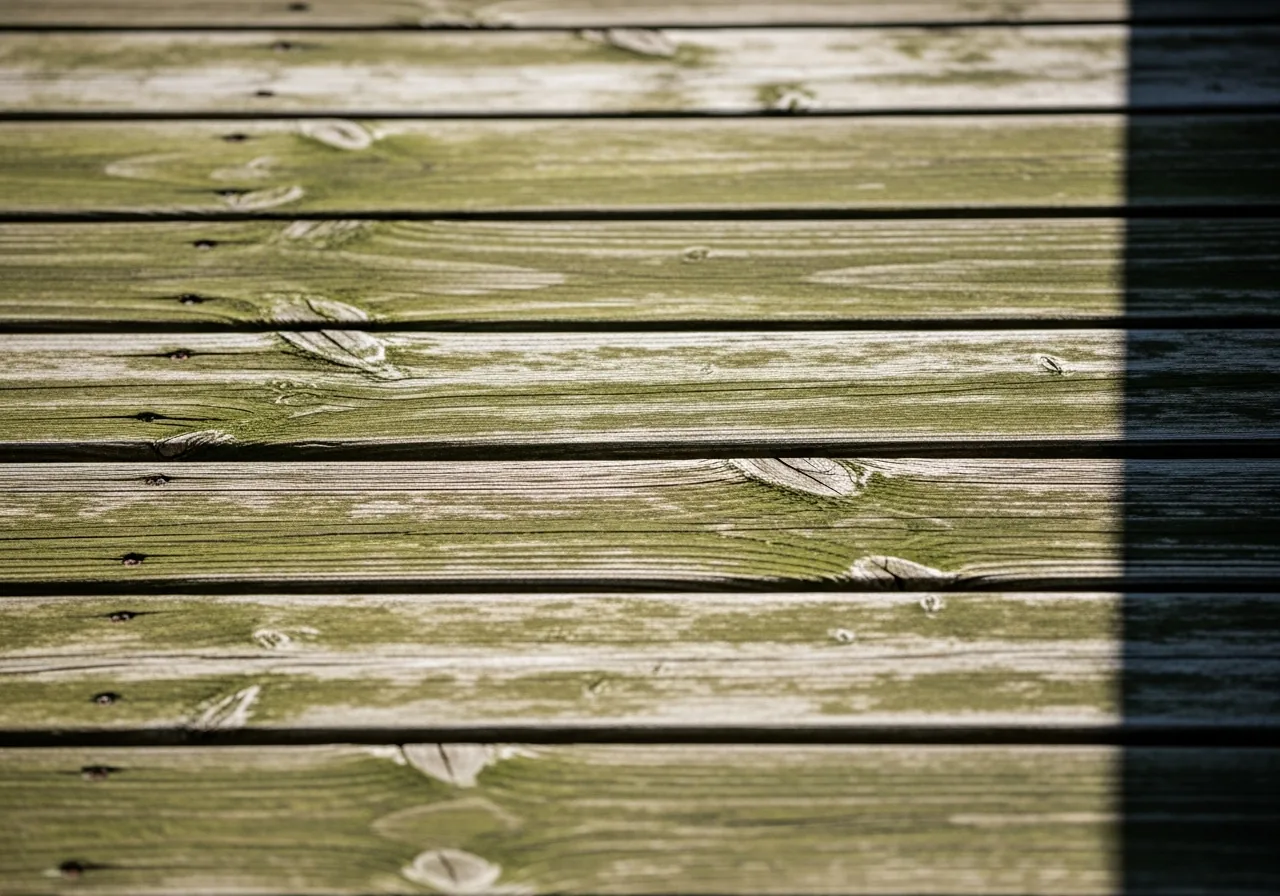
Go step outside and take a real look at your deck or patio. If the wood has turned gray, the concrete has gone dark green, or there are slick patches spreading across the surface, that's not just normal aging. Decks and patios in Cumming, GA take a beating that catches most homeowners off guard. Between the humidity, the tree canopy, and Georgia's heat, organic growth builds up faster here than most people expect.
Forsyth County sits in a humid subtropical climate zone, which means long, soggy summers and winters that rarely freeze long enough to kill off biological growth. Algae, mold, mildew, and lichen all love it here. They root into wood fibers and concrete pores and spread fast — sometimes doubling their coverage in a single season. By the time you spot green or black staining, it's been building for months already.
For wood decks, the combination of Georgia humidity and shaded lots is especially punishing. Green or black streaking on your boards comes from algae and mildew colonies that have set up camp in the wood grain. Our humid summers make these organisms spread quickly, especially on north-facing decks or anything sitting under tree canopy. Once algae roots into wood, it holds moisture against the surface all day and all night. That constant dampness speeds up rot and surface breakdown faster than UV exposure alone ever could.
Composite decking isn't immune either. In neighborhoods like Windermere or Hampton Golf Village, composite boards develop the same green and black growth as wood. The material is more resistant to rot, but biological growth still bonds to the textured surface and creates the same slip hazards and aesthetic damage.
Concrete and paver patios face a different but equally relentless set of problems. Forsyth County gets over 55 inches of rain per year — well above the national average. Every heavy downpour washes organic debris straight onto your patio. Pollen, leaves, tree sap, red Georgia clay. All of it settles into the textured surface and feeds biological growth. A faint green tint in spring becomes a thick black crust by fall if nobody treats it.
Then there's the heat. Summer temps in Cumming push well into the 90s regularly. That heat bakes pollen, sap, and organic debris right into concrete and paver surfaces. Pool patios and entertainment areas cycle between soaking wet and scorching hot all season long — and that back and forth ages the surface fast.
Tree canopy compounds all of it. Neighborhoods like Polo Golf and Country Club, South Forsyth, and Hampton Golf Village are packed with mature oaks, pines, and sweetgums. Those trees drop seed pods, sap, and tannin-rich leaves straight onto your deck and patio. Tannins soak into porous surfaces and leave brown marks that look exactly like rust. Pollen collects in every groove and gap and becomes a buffet for mold spores. More shade means slower drying. Slower drying means more time for organisms to dig in and spread.
Decks and patios in Cumming are fighting humidity, heavy rainfall, aggressive pollen, and biological growth all at the same time. Understanding why it happens is the first step toward knowing what it actually takes to clean it right and keep it cleaner longer.
Signs Your Deck or Patio Needs Professional Cleaning Now
Most homeowners we talk to waited longer than they should have. In Cumming and across Forsyth County, humid summers and mild winters create perfect conditions for algae, mold, and mildew to grab hold fast. A deck or patio that looked clean in spring can be covered in green and black growth by July. Here's what to look for right now.
Signs Your Deck Needs Attention
Discoloration is the first thing most people notice. Wood that used to be golden or warm brown now looks flat and ashy. That's not just cosmetic. It means the wood fibers themselves are breaking down from UV exposure and trapped moisture. A professional deck cleaning can reverse that — but only if you catch it before the damage works deeper into the grain.
Green or black streaking on boards means algae, mold, and mildew colonies have set up camp. Once algae roots into wood, it holds moisture against the surface nonstop. That constant dampness is exactly what speeds up rot.
Run your hand along a board. If it feels rough, fuzzy, or splintered in spots that used to be smooth, the wood surface is breaking down. Foot traffic grinds dirt and grit into those softened fibers, opening the surface up even more and letting water soak in deeper.
Slippery spots aren't just a cleaning problem — they're a safety issue. A thin biofilm of algae or mildew makes wood dangerously slick after morning dew or rain. If you or your kids have slipped on a wet board, that surface needs attention now.
Check between your deck boards too. Dark debris packed into the gaps holds moisture against the wood nonstop. By the time mold shows up on the top surface, it's usually been growing underneath for months already.
Signs Your Patio Needs Attention
These are the clearest signals your patio needs professional cleaning now:
- Green or black film covering any part of the surface
- Dark streaks running from edges or joints outward
- A slick or slimy feel underfoot, especially after rain
- White powdery deposits on concrete or pavers (efflorescence)
- Grout lines or joints that look darker than the surrounding surface
- Staining from leaves, rust, or standing water that hasn't faded on its own
- A musty or earthy smell when the surface is dry
The slippery surface is the one that concerns us most. Algae and mold make outdoor surfaces genuinely dangerous — especially in neighborhoods like South Forsyth where shaded lots stay damp long after rain. Think about who is using that patio. Kids. Pets. Older family members. A slick surface is not something to put off until next season.
Efflorescence is another warning sign homeowners tend to brush off. That white chalky residue means water is moving through your concrete or pavers and pulling minerals to the surface. Left alone, it leads to spalling — where the surface starts to flake and crumble.
Leaf stains and rust stains are common in Cumming, especially on patios near mature trees or metal furniture. Rain carries tannins from leaves directly into the surface. Iron from furniture or irrigation fixtures oxidizes and leaves orange marks that go deeper over time. A garden hose won't fix that.
If you're seeing two or more of these signs on your deck or patio right now, don't wait for fall. Every week of growth means more penetration into the surface, more staining, and more risk of a slip-and-fall. Most decks and patios in Forsyth County — even those neglected for years — can be restored with professional cleaning before the damage becomes permanent.
How OCB Cleans Decks and Patios in Cumming, GA
Before we pull out a single piece of equipment, we walk the entire surface. This step matters more than most homeowners realize. Every deck and patio in Cumming, GA has its own set of problems, and we read the surface carefully before we touch anything. We look at the material, the age, any soft spots or cracks, how deep the biological growth has gone, and what's surrounding the work area. That inspection shapes every decision we make after it. We're fully licensed and insured, so if something unexpected turns up during the walkthrough, you're covered.
Deck Cleaning
For wood and composite decks, the inspection tells us exactly what PSI to dial in before we pull the trigger. Composite decking in neighborhoods like Windermere or Hampton Golf Village gets treated differently than a weathered pine deck on an older home near downtown Cumming. Too much pressure raises wood grain, splinters boards, or voids composite manufacturer guidelines. Too little leaves mold spores behind. Neither outcome is acceptable.
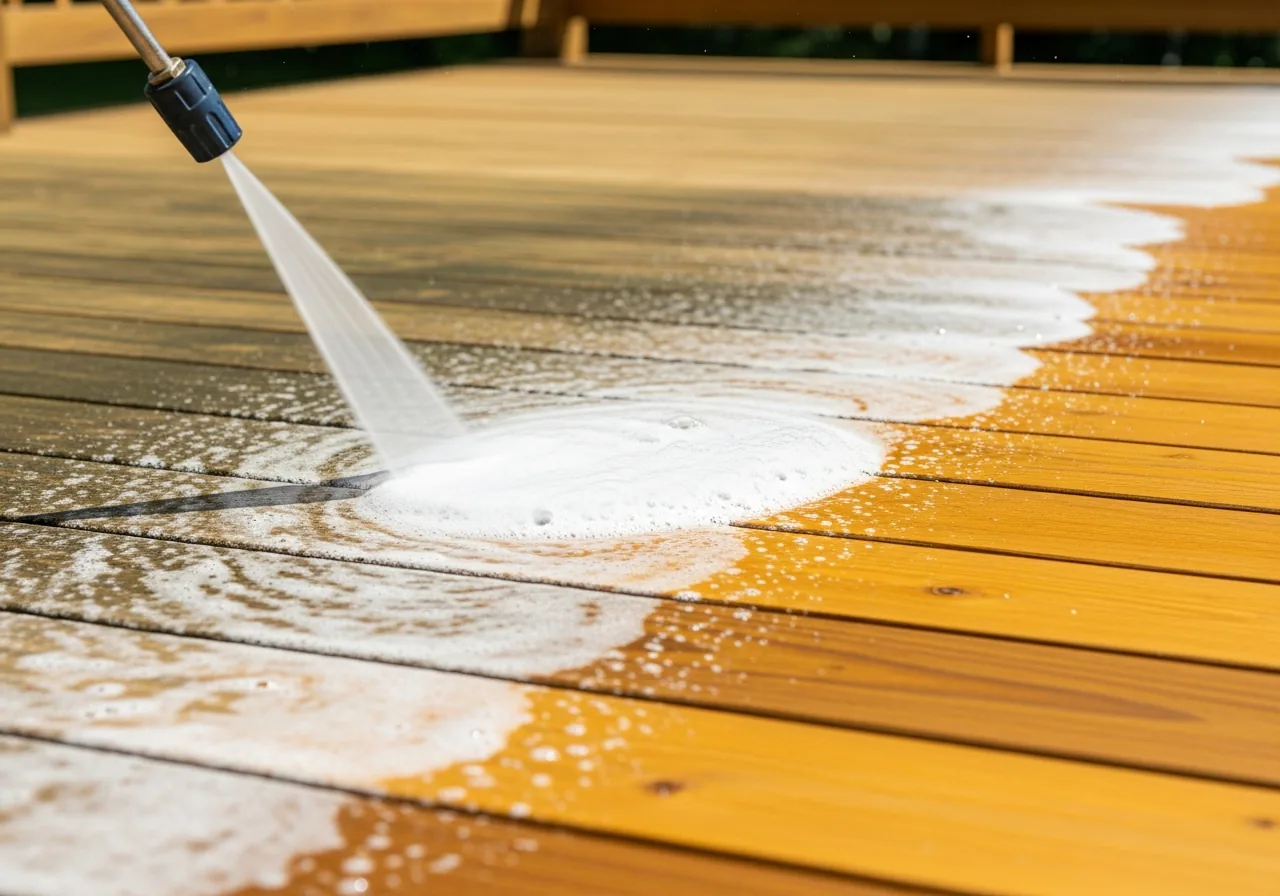
Once we've assessed the deck, we apply a pre-treatment solution to the surface first. This breaks down the biofilm — the layer of algae, mold, and mildew bonded to wood and composite fibers. We let it dwell for the right amount of time. Rushing this step is one of the most common mistakes less experienced crews make. The chemistry needs time to do its job so the pressure wash removes contamination cleanly rather than just pushing it around the surface.
Then we work in controlled passes across the deck boards, moving with the grain of the wood. This technique lifts embedded dirt and dead organic material without creating the streaky tiger-stripe pattern you see after a rushed job. For railings, spindles, and stair stringers, we adjust angle and swap nozzle sizes. These areas trap moisture and hold the most mildew, particularly on north-facing decks in Cumming that stay shaded through the morning hours.
After the main wash, we rinse everything thoroughly, including the area underneath the deck if accessible. Leftover cleaning solution on surrounding plants or concrete causes problems, so we take care of landscaping and hardscape as part of the process. The job is not done until the rinse water running off is clear.
Patio Cleaning
For concrete and paver patios, we use a surface cleaner attachment rather than a direct wand. A surface cleaner spins two nozzles at a controlled, even distance across the slab. This eliminates the streaking and tiger-striping that a standard wand leaves behind. Every square inch gets the same consistent cleaning pass, from the center of the patio all the way to the edges along your home's foundation.
Before any pressure hits the patio surface, we pre-treat areas with heavy biological growth using a biodegradable cleaning solution. We let it dwell — typically five to ten minutes depending on how heavy the growth is. That kills algae, mold, and mildew at the root level so the pressure wash removes dead contamination rather than just pushing live growth around. Skipping this step is the main reason DIY pressure washing produces results that fade within weeks.
Pavers and flagstone require extra attention at the joints. Dirt, weeds, and biological growth pack into those gaps and act as a reservoir that re-contaminates the surface after cleaning. We work the joints carefully to flush that material out without disturbing the sand base underneath.
After the main cleaning pass, we treat individual problem spots — rust from metal furniture, tannin stains from leaves, oil drips near a grill. These touch-ups are what separate a thorough cleaning from a surface-level rinse. We also clean edges where the patio meets a screen enclosure, step, retaining wall, or landscaping bed. Those borders collect some of the worst buildup and get missed all the time.
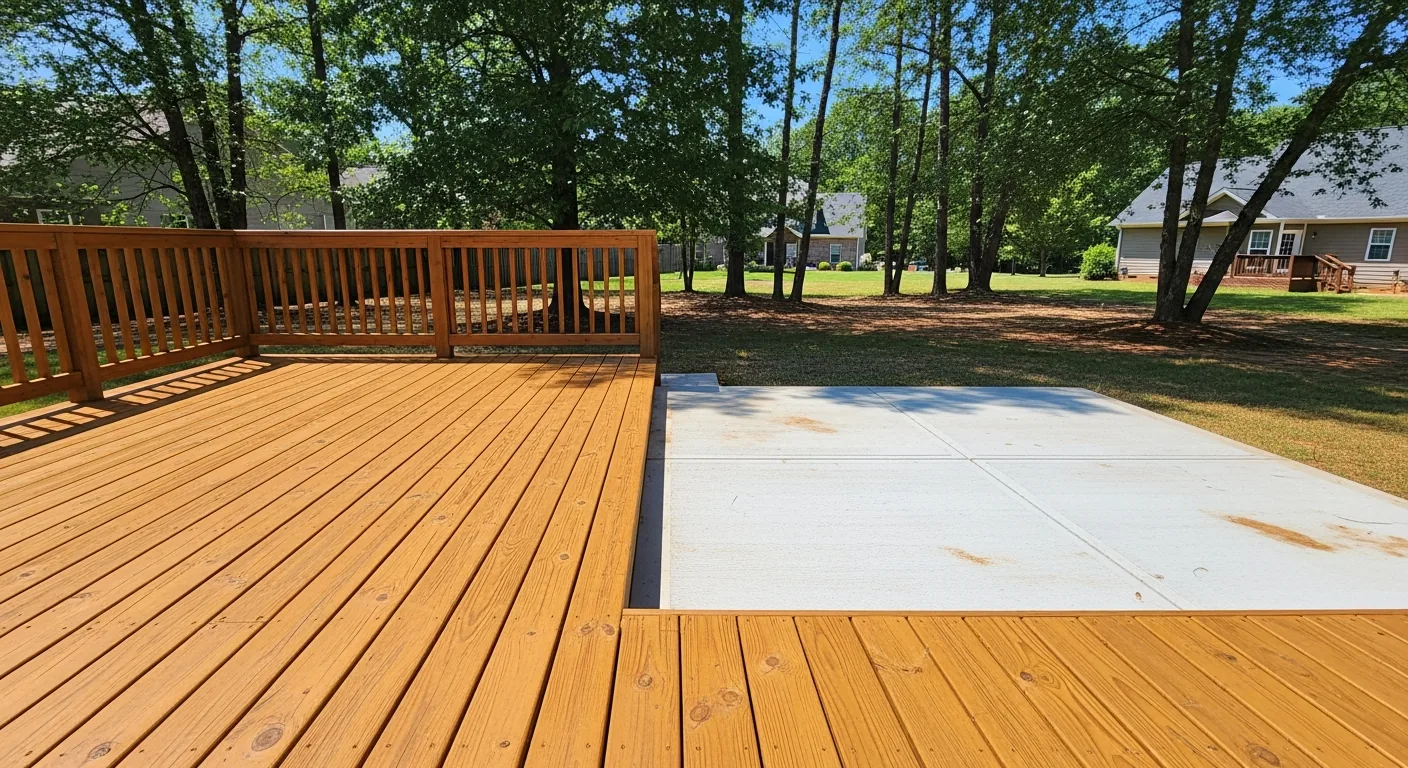
A properly cleaned deck or patio reveals the true condition of the surface underneath all that buildup. We point out anything worth knowing — soft boards, cracks that need sealing, areas where drainage is causing recurring staining. No surprises after we leave. You get the full picture of your surface's condition so you can make the right call on next steps.
From the first pre-treatment to the final rinse, a standard deck or patio cleaning in Cumming typically takes two to four hours depending on size and condition. We bring our own equipment, work around your schedule, and make sure the area around your deck and patio — including nearby plants and landscaping — is rinsed of any overspray before we leave.
Frequently Asked Questions
Everything you need to know about our deck and patio cleaning service.
Most decks and patios in Cumming need professional cleaning once a year. Forsyth County's humid summers create perfect conditions for mold, algae, and mildew to grow fast. North-facing decks or patios under heavy tree canopy may need attention twice a year. If you wait longer than 12 months, biological growth works deeper into wood fibers and concrete pores and becomes much harder to remove completely.
It depends on the surface and the PSI used. Wood decks need low pressure matched to the species and age of the wood — too much raises the grain and splinters boards. Composite decking needs even lower pressure to avoid voiding manufacturer guidelines. Concrete and pavers can handle more pressure with a surface cleaner attachment. Travertine, slate, and painted concrete need a soft wash approach. We inspect every surface before we touch any equipment so the right method is used for what's actually in front of us.
Clear furniture, grills, potted plants, rugs, and any items stored on or under your deck or patio. That gives us full access to every board, railing, and surface edge. If you have vehicles near the work area, move them before we arrive. You do not need to pre-wet anything or apply any products yourself. We handle pre-treatment and rinse as part of our process. Just give us a clear surface and we take it from there.
The most common reason is skipping pre-treatment. If you just rinse the surface without applying a cleaning agent first, you remove the top layer of algae but leave the roots behind. Growth comes back fast — sometimes within a few weeks. We apply a cleaning solution to areas with heavy biological growth and let it dwell before any rinsing starts. That kills the growth at the root level so your patio stays cleaner much longer after each service.
That's efflorescence — and it's worth paying attention to. It happens when water moves through your concrete or pavers and pulls minerals to the surface as it dries. It can point to drainage issues or early surface breakdown. Left alone, it leads to spalling, where the surface starts to flake and crumble. Professional cleaning removes those deposits so you can see the surface clearly and know what you're actually dealing with before it gets worse.
A proper professional cleaning removes mold and algae at the root level, not just what you can see on top. We apply a pre-treatment solution that breaks down the biofilm bonded to your boards or concrete before any pressure is applied. Skipping that step just pushes contamination around without killing it. In humid areas like Cumming, GA, mold returns faster on a surface that was not treated correctly the first time.
What's Covered on This Page
Get Started
Get Your Free Deck & Patio Cleaning Estimate
No obligation. No pressure. Just a fast, honest quote for your property.
(404) 632-8810