Driveway Cleaning in Cumming, GA
Remove oil stains, algae, rust, and years of embedded grime from your concrete or paver driveway with professional pressure washing.
Why Driveways in Cumming Get Dirty So Quickly
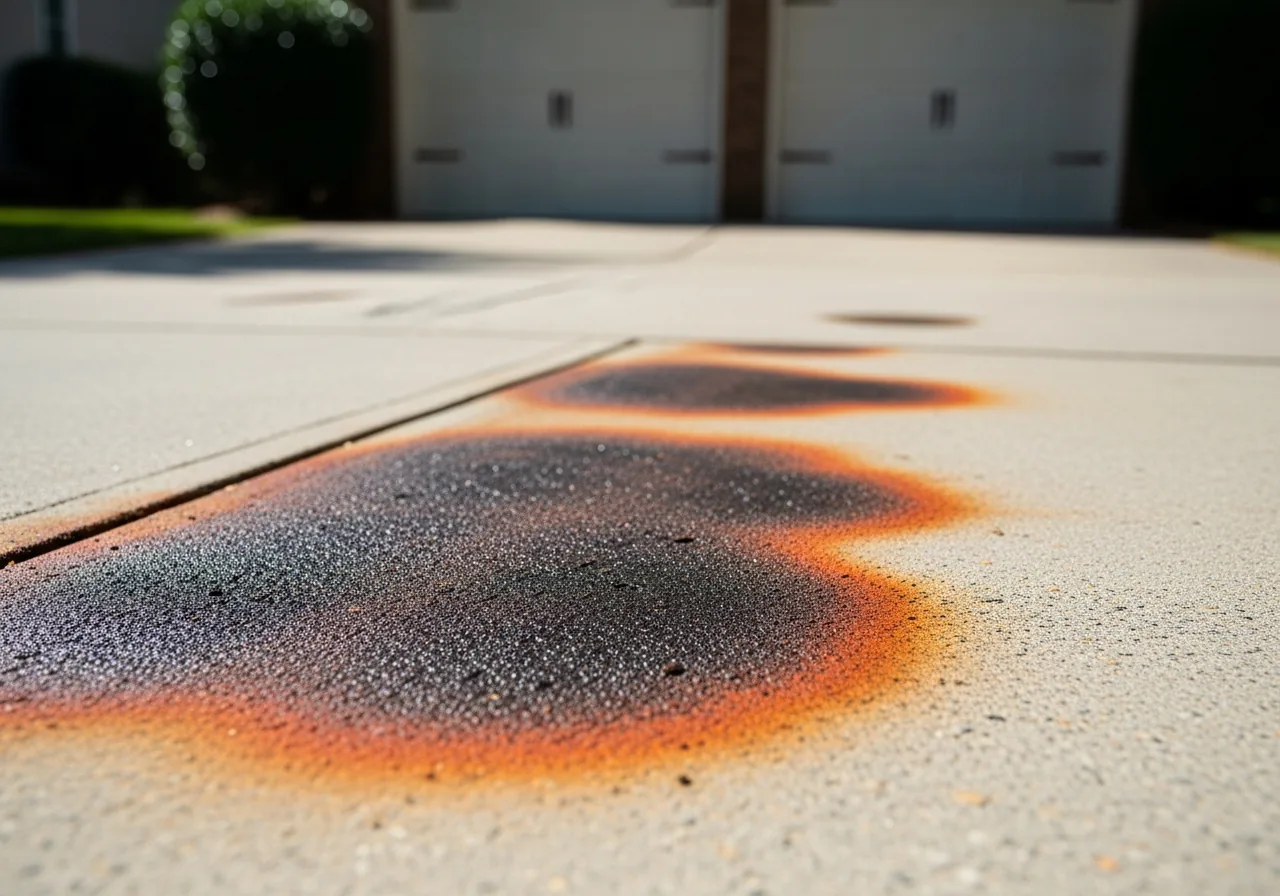
Take a look at your driveway right now. Dark tire tracks running down the center. Green algae creeping in from the edges. Rust-colored stains spreading across the concrete like they own the place. If that sounds familiar, you're in good company. Driveways in Cumming, GA take a beating that catches most homeowners off guard.
Forsyth County sits in a humid subtropical climate zone, which means long, soggy summers and winters that rarely freeze long enough to kill off biological growth. Algae, mold, mildew, lichen — they all love it here. They root into the pores of concrete and asphalt, and they spread fast. Sometimes doubling their coverage in one season. By the time you spot green or black staining, it's been building for months already.
Rain makes everything worse. Cumming averages about 56 inches per year, way above the national average of 38. Every heavy downpour washes organic debris straight onto your driveway. Pollen, leaves, dirt, tree sap. All of it settles into the concrete's texture and becomes a buffet for biological growth. Got mature Georgia pines or hardwoods shading your driveway? That means slower drying. And faster algae colonization.
Then there's pollen. The Forsyth County area is notorious for it. Yellow pine pollen coats every outdoor surface from February through April. Mix that with morning dew and let it sit on your driveway, and you get a sticky film that bonds to concrete and asphalt. That film traps more dirt, more debris, more moisture. The staining cycle just accelerates week after week. We get calls about this every single spring — usually right around the time someone notices the yellow has turned into something darker and way harder to ignore.
In neighborhoods like Windermere or near the South Forsyth corridor, a lot of homes have mature tree canopies hanging right over the driveway. Those trees drop seed pods, sap, and tannin-rich leaves that leave dark, acidic stains. Tannin stains are stubborn. Really stubborn. They soak into concrete fast and oxidize over time, shifting from brown to near-black if nobody treats them.
Vehicle traffic makes all of this worse. Every car pulling in and out deposits a thin layer of oil, brake dust, and rubber residue. Months of that builds up into those dark tire-track patterns running the length of your driveway. During Cumming's summer heat, oil and grease soften and soak deeper into the concrete. Wait a year or two and those stains get seriously difficult to remove. That's usually when people call us.
Rust stains? Super common around here. Well water is prevalent across parts of Forsyth County, and irrigation systems pulling from iron-rich groundwater leave orange and brown rust deposits wherever the spray hits the driveway edge. Those stains oxidize fast and grip concrete tight. A regular wash won't touch them. They need specific treatment to lift without damaging the surface underneath.
New construction runoff is a factor too, especially in the fast-growing communities around Cumming. If your neighborhood has seen recent development nearby, construction sediment, clay, red Georgia dirt, and concrete slurry can wash across your driveway during heavy rains. That red clay? It's a nightmare for staining. It works into the surface texture, dries into a rust-toned film, and makes a brand-new driveway look years older than it actually is.
So your driveway in Cumming is fighting humidity, heavy rainfall, aggressive pollen, vehicle fluids, and biological growth all at the same time. That's not a maintenance failure on your part. It's just what happens to driveways in this part of Georgia. Understanding why it happens is the first step toward knowing what it actually takes to clean it right and keep it cleaner longer.
What Driveway Cleaning in Cumming Actually Removes
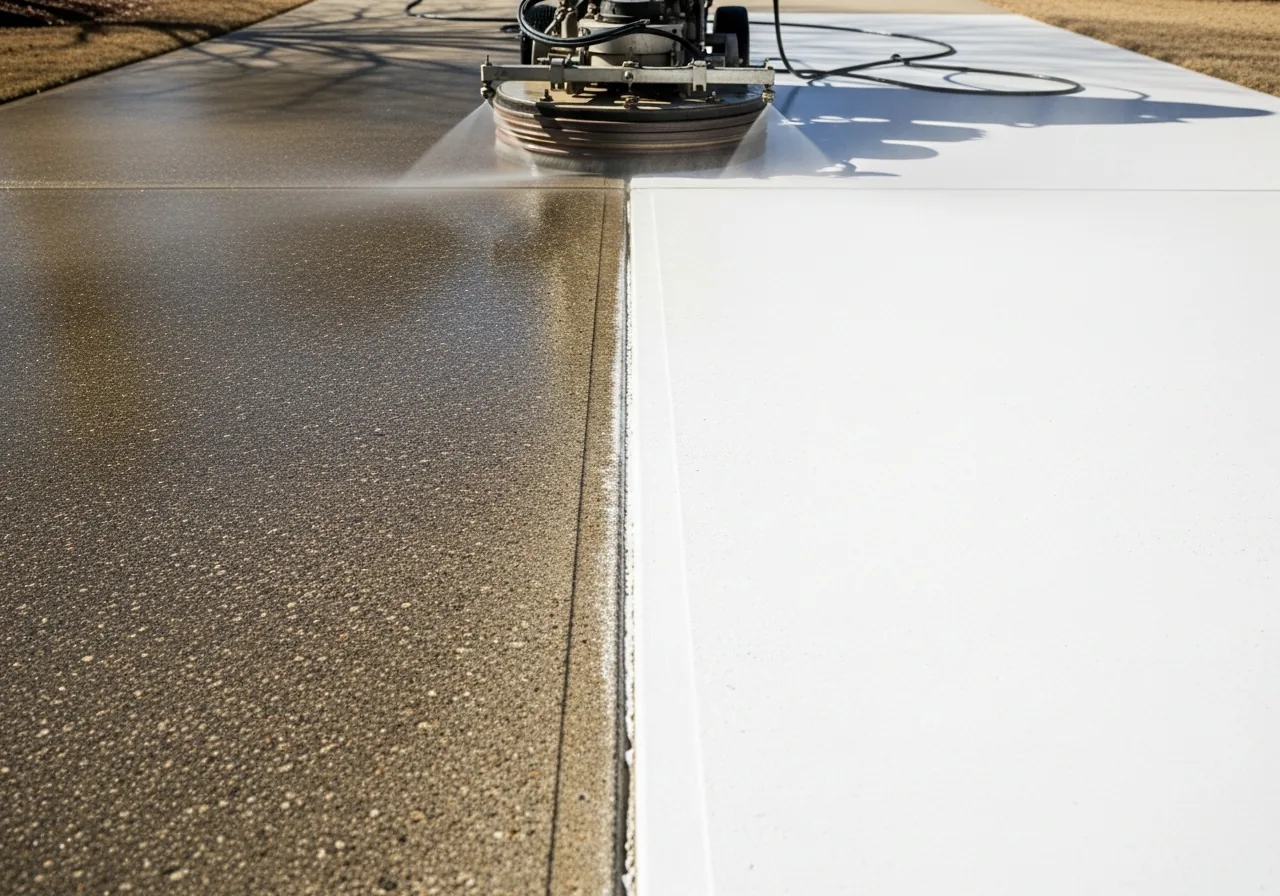
Your driveway tells a story before anyone even reaches your front door. Dark tire tracks, green streaks running toward the street, a surface that looks permanently wrecked. You already know the problem. Driveway cleaning tackles every one of those issues, and most homeowners in Cumming, GA are genuinely surprised by how much has quietly piled up over the years.
Oil and grease are the most visible offenders. Every vehicle that parks on your concrete or asphalt leaves behind residue. Over time, those drips stack up into dark, spreading stains that rain never washes away. We see this constantly on driveways across Forsyth County, especially where a truck or older vehicle parks in the same spot day after day. Water pressure alone won't lift oil. It takes the right detergents applied correctly to break the bond between grease and the surface. Skip that chemistry step and the stain stays put. Period.
Biological growth is the second big category. Algae, mold, and mildew love Georgia's humidity. Warm springs and wet summers in Cumming create perfect conditions for green and black growth to spread across concrete. What starts as a faint green tint in a shaded corner can cover half a driveway within a single season.
Sound like what you're dealing with? This growth isn't just cosmetic. It makes surfaces slippery and works into the pores of concrete over time, getting tougher to remove the longer it sits. Not sure where to start? Give us a call and we'll take a look.
Rust stains are another common find. They show up a lot near garage doors where metal hardware, fertilizer spreaders, or irrigation water contacts the surface. Rust leaves orange or brown streaks that look like permanent damage. They're not permanent, but they do need specific treatment. A standard pressure wash won't cut it. Lifting those mineral deposits takes a targeted approach that won't etch the concrete in the process.
Dirt and sediment accumulation might seem minor. But here's the thing — in neighborhoods near new construction (and that describes a huge portion of Cumming and the surrounding Forsyth County area), fine clay and red Georgia dirt pack into the texture of a driveway and create a dingy, uneven look. This buildup also speeds up surface wear because abrasive particles grind into the concrete every time a vehicle rolls over them.
Tire marks are their own beast. Rubber compounds in tires transfer to concrete under heat and pressure, leaving black streaks that look like permanent scars. We remove these regularly from driveways in neighborhoods like Windermere and along the SR 400 corridor. The pattern is almost always the same. Same spot, same vehicle, same corner of the driveway. Week after week.
Efflorescence is something a lot of homeowners mistake for bleach staining or sun damage. It's that white, chalky residue that shows up on concrete. What's actually happening? Mineral salt migrating to the surface as moisture moves through the slab. Especially common on newer driveways. Left alone, it dulls the appearance of even a well-maintained surface.
And then there's general surface grime. Dust, pollen, exhaust residue, organic debris — it all settles onto every horizontal surface over a season. In Cumming, spring pollen alone coats everything in a yellow film within days. That layer bonds with moisture and becomes a sticky base for everything else that lands on your driveway.
Each of these contaminants needs a different approach. That's why a thorough driveway cleaning isn't a single step. It's a process that starts with identifying what's on the surface before any equipment touches it. When we work on a driveway in Cumming, we look at the surface type, figure out which stain categories are present, and check the condition of the concrete or asphalt before we begin. That's what separates a clean driveway from a damaged one.
How OCB Pressure Washing Prepares for Every Cumming, GA Driveway Job
Your driveway doesn't clean itself. Oil stains, red Georgia clay, mildew, years of tire traffic — it all builds up in layers. Before we ever pull a pressure washer off the truck, we do the work that separates a thorough clean from a surface rinse. We're fully licensed and insured, and we've been working driveways across Forsyth County long enough to know what this specific climate does to concrete.
Every job in Cumming starts with a walkthrough. We inspect the full driveway surface — concrete, pavers, asphalt, or exposed aggregate — before we touch anything. We're looking for existing cracks, soft spots, efflorescence, and areas where water is already pooling. Forsyth County homes sit on clay-heavy soil that shifts with the seasons. That movement creates hairline cracks that can widen if high-pressure water hits them carelessly. We find those spots first. A homeowner called us last spring after another crew left two new cracks in a four-year-old driveway. That's exactly what a proper walkthrough prevents.
We also check the edges. Driveways in neighborhoods like Windermere and South Forsyth often have landscaping borders, flower beds, and decorative stone right up against the concrete. We note where water runoff will travel, then move potted plants, doormats, and anything stored near the driveway entrance. It protects your property and keeps cleaning solution away from plants and grass.
Next up, we figure out the staining. Not every stain responds to the same treatment. Motor oil needs a degreaser with dwell time before pressure washing begins. Rust stains from well water or metal furniture? Totally different chemistry. Mildew and algae — extremely common in Cumming's humid summers — respond well to a soft wash pre-treatment before we increase pressure. Skip this step and you're just pushing stains deeper into the concrete's pore structure instead of lifting them out.
We dilute and apply pre-treatment solutions based on the surface type. Concrete is porous and holds onto organic material. Pavers have joint sand that can dislodge if we rush things. So we let the chemistry do its job for several minutes before starting the pressure wash pass. This dwell time is one of the most important parts of the whole process. Rushed crews skip it entirely.
Equipment setup matters too. We match nozzle selection and PSI to the surface. A newer brushed concrete driveway in a Cumming subdivision handles different pressure than a twenty-year-old stamped concrete pad. Wrong nozzle at the wrong distance etches the surface permanently. We adjust for each job because there's no single setting that works on every driveway.
Water supply is another thing we check. Some properties in outer Forsyth County have lower water pressure at the spigot, so we carry buffer tanks when needed. An interrupted pass leaves visible lines and uneven results. We plan for this before it becomes a problem on your driveway.
Before we start, we walk the area with you. We point out what we found during the inspection. If there's a crack that needs sealing after the clean, we tell you. If there's a stain that may not fully lift because it's soaked in too deep, we say so upfront. No surprises at the end. You know exactly what to expect before the first drop of water hits your driveway.
Preparation is what makes the difference between a driveway that looks clean for two weeks and one that stays cleaner for months. Every step we take before turning on the machine is done specifically for your property, your surface, and the conditions we find that day in Cumming.
Frequently Asked Questions
Everything you need to know about our driveway cleaning service.
Most driveways in Cumming need cleaning once a year, but many homes need it twice. Forsyth County's humidity, heavy rainfall, and pollen season hit driveways hard. If you have mature trees hanging over your driveway — like in Windermere — biological growth moves fast. Once a year keeps staining from bonding deep into the concrete. Twice a year keeps your surface looking sharp and makes each cleaning easier than the last.
Pressure washing done correctly will not damage your concrete. The key is using the right pressure setting and the right nozzle for your surface. Too much pressure on older or already-cracked concrete can make things worse. We always check the surface condition before we start. Pairing water pressure with the right detergents does the real work — especially on oil, rust, and biological growth that water alone can't lift.
Those rust stains almost always come from irrigation water. A lot of homes in Forsyth County pull from iron-rich well water or groundwater. When your sprinkler system hits the driveway edge, that iron oxidizes fast and leaves orange or brown streaks. A standard pressure wash won't remove them. They need a targeted treatment to lift the mineral deposits without etching or discoloring the concrete surface underneath.
Yes, we remove algae, mold, and mildew from driveways all the time here in Cumming. Georgia's warm, wet climate makes biological growth spread fast — especially on shaded driveways. The green or black you're seeing has rooted into the pores of your concrete. Water pressure alone won't kill it or pull it out. We use detergents designed to break down that growth at the root so it doesn't come back as quickly.
Most driveway cleanings take between one and two hours depending on size and staining. You do not need to be home for the service. We just need access to an outdoor water spigot and a clear path to the driveway. If you have vehicles parked on the surface, moving them before we arrive helps us clean the full area. We'll let you know when we're done and what we found.
It makes a bigger difference than most people expect. Your driveway is one of the first things anyone sees when they pull up to your home. Dark tire tracks, green algae, and rust stains make even a well-kept home look neglected. After a proper cleaning, the surface color comes back and the whole front of your property looks sharper. We hear this from homeowners across Cumming every single time.
Get Started
Get Your Free Driveway Cleaning Estimate
No obligation. No pressure. Just a fast, honest quote for your property.
(404) 632-8810