
Concrete Staining in Cumming, GA
Transform driveways, patios, pool decks, walkways, and garage floors with premium acid and water-based stains tailored to Forsyth County's climate.
What Concrete Staining Does for Cumming, GA Homes and Businesses
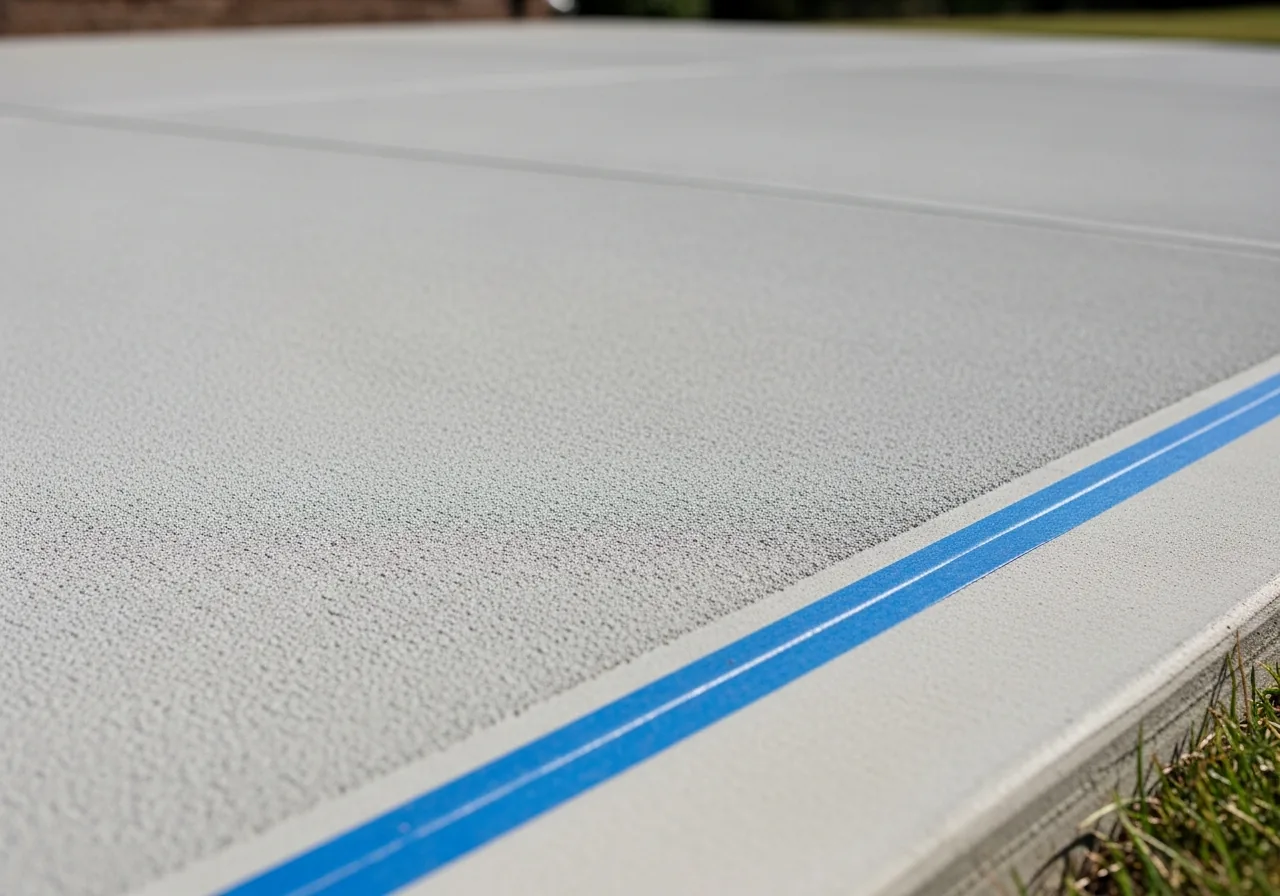
Your concrete looks tired. Gray, chalky, stained from years of Georgia weather and foot traffic and relentless UV rays. Those plain slabs around your home or business in Cumming, GA don't have to stay that way. Concrete staining turns that worn-out surface into something that actually adds value and curb appeal, and we do it without ripping out what's already there.
We work all over Forsyth County. Same story on property after property. Driveways fade to a dull gray from the sun. Patios pick up rust marks, tire streaks, and mildew. Pool decks get slick and washed out. Garage floors? Every oil drip and scuff mark shows. Staining takes care of all of it, and it works with the concrete you've already got.
There are two main types of concrete stain. Which one we use depends on your surface and what you're going for. Acid-based stains react chemically with the minerals in your concrete. You get rich, earthy tones — browns, tans, terracotta shades — with natural variation that looks more like stone than a painted slab. No two projects come out identical. That's actually what people love about it. Water-based stains give you way more color choices and more predictable coverage. They sit on top of the surface instead of reacting with it, so the color stays consistent across the whole area. Picking between them is simpler than most folks expect once we see your surface in person.
For homeowners in neighborhoods like Windermere or Sharon Springs, exterior staining is one of the quickest ways to change how your property looks from the street. A stained driveway or front walkway makes an immediate difference. Back patios and pool decks benefit too. Staining adds color while a sealer coat on top cuts down slip risk and makes cleaning easier. With Forsyth County's hot summers and rainy springs, a sealed stained surface holds up way better than bare concrete ever will.
Commercial properties get just as much out of it. Retail storefronts, restaurant patios, office entrances, warehouse floors. They all take a beating. Staining gives those surfaces a finished, intentional look that bare concrete just can't pull off. It also makes upkeep simpler. A sealed stained floor resists spills and scuffs better than untreated concrete. For businesses along Cumming's busier corridors, that kind of durability matters every single day.
Interior concrete staining is picking up fast in Forsyth County homes, especially finished basements and garage conversions. Homeowners who want a modern, polished feel without installing hardwood or tile are going with stained and sealed concrete instead. It handles moisture better than most flooring options. Won't warp, crack, or peel the way other materials can with Georgia's humidity swings. A stained interior floor can look like polished stone at a fraction of the disruption and cost of a full flooring replacement.
One thing we want homeowners and business owners to understand: staining is not a cover-up. It won't hide major cracks, deep pitting, or structural damage. It enhances what's already there. That's why surface preparation matters so much. We look at every slab before recommending a stain type. If your concrete needs repairs first, we tell you upfront. The stain only looks as good as the surface underneath it.
Properly stained and sealed concrete can last decades with routine maintenance. That's far longer than coatings that peel and chip over time. That longevity is why so many Cumming homeowners and business owners choose staining over surface coatings. You get a result that holds up through Georgia summers, freeze-thaw cycles in winter, and years of regular use.
If your concrete looks rough right now, that's exactly the starting point we work from every day. We're ready to look at your surface and walk you through what staining can realistically do for your specific slab.
How to Know If Your Cumming, GA Concrete Is Ready to Stain
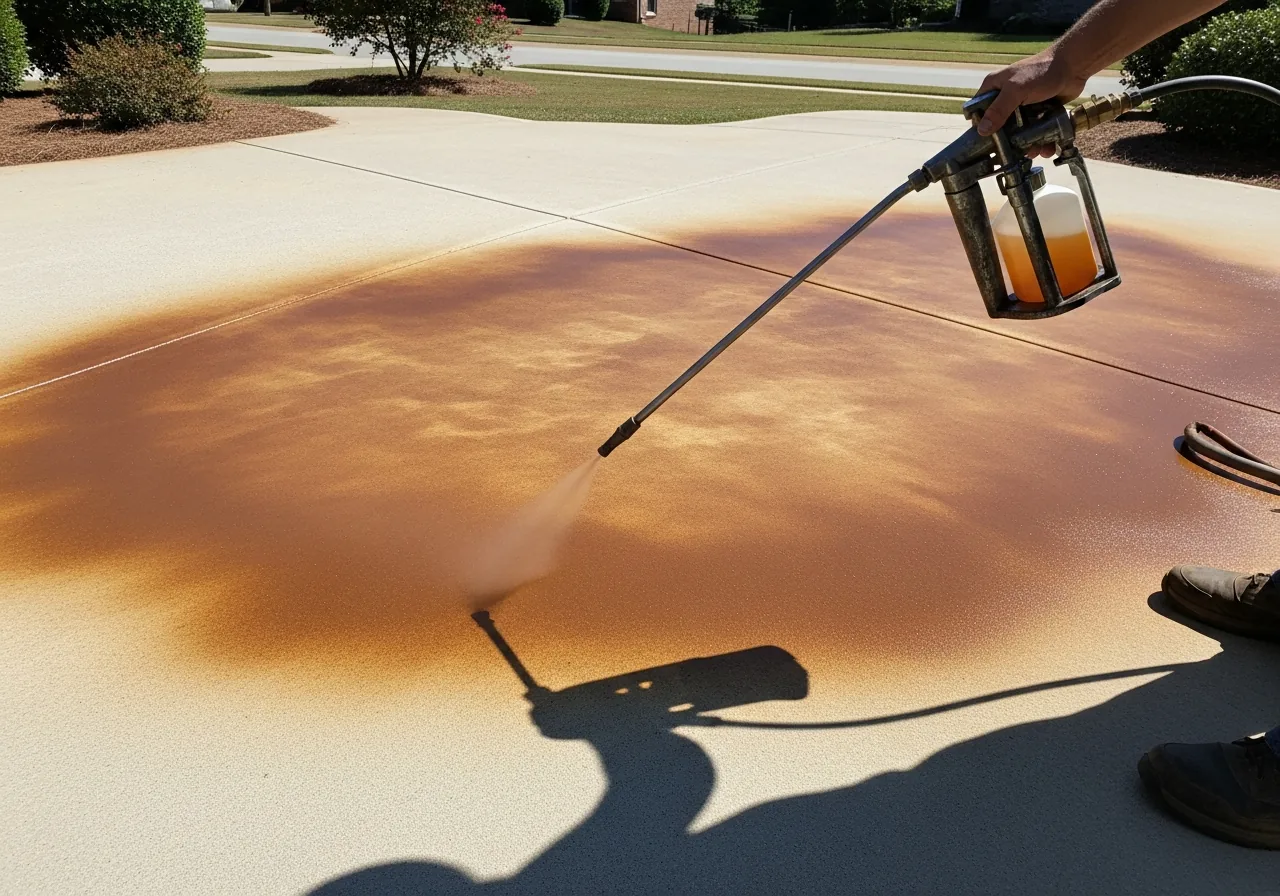
Your concrete might look fine from a distance. Up close? Different story. Cracks, old sealers, oil stains, surface damage. Any of these can stop a concrete staining project before it starts. Getting this step right is the difference between a finish that lasts years and one that peels within months.
The most important thing to check first is whether your concrete is porous enough to absorb stain. Here in Cumming GA, our clay-heavy soil shifts with the seasons. That movement stresses slabs over time and can create a surface that looks solid but has actually been sealed shut by years of foot traffic, vehicle oil, or some old coating. If the surface isn't open and absorbent, no stain will bond the way it should.
Do the water drop test. Pour a small amount of water onto the concrete. If it beads up and sits on top, the surface is sealed or contaminated. If it soaks in within 30 seconds, the concrete is ready to accept stain. This simple test tells you more than any visual inspection can. We run it on every slab we evaluate. Could be a driveway in a newer subdivision off Peachtree Parkway or a patio that's been in the same family for twenty years. Same test, every time.
Not sure what you're looking at? Give us a call and we can talk through it before you do anything.
Age matters too. New concrete needs time to fully cure before staining. Fresh slabs poured in Forsyth County typically need at least 28 days. Some contractors push that timeline and end up with adhesion failures. We don't. If your concrete was recently poured as part of a renovation or addition, we'll let you know exactly when it's ready so you're not wasting money on a job done too soon.
Surface contamination is one of the most common problems we find. Grease from vehicles, fertilizer residue, overspray, mildew. All of it blocks stain penetration. Concrete in shaded areas — common in heavily wooded neighborhoods around Lake Lanier — tends to hold moisture and develop biological growth that needs to be fully removed before any staining work begins. A pressure wash alone rarely handles this. Proper surface prep means cleaning, degreasing, and sometimes light acid etching to open the concrete's pores.
Existing sealers are another issue. Many homeowners in Cumming GA have had their driveways or patios sealed at some point and may not even remember it. If you notice a slight sheen on the surface, or if the water test shows beading, there's likely a sealer present. That sealer has to come off completely. Grinding or chemical stripping are the two main methods, and the right choice depends on how thick the sealer is and what type was used.
Cracks and spalling need attention before staining begins too. Small hairline cracks can be repaired and often become nearly invisible after staining. Larger structural cracks are a different situation. We look at each crack individually to figure out whether it's cosmetic or a sign of deeper movement in the slab. Staining over an unaddressed structural crack won't hide the problem. It'll actually make it more obvious once the finish cures.
We talk to homeowners every week who stained their own concrete and called us six months later wondering why it's peeling. Nine times out of ten, it comes back to moisture. Concrete in Forsyth County can hold a lot of moisture, especially after heavy rain or during our humid summers. Staining over a wet slab traps that moisture and leads to bubbling, blistering, or delamination. We check moisture levels before every project and will reschedule if conditions aren't right. That's not a delay. That's how you protect your investment and get results that hold up through Georgia's heat, rain, and freeze-thaw cycles.
Surface Preparation Steps Before Concrete Staining in Cumming, GA
Go take a look at your concrete surface right now. Maybe it has old grease stains from a car, or a sealer applied years ago that you forgot about. If any of that stays on the surface, the stain won't penetrate. Preparation is the step that separates a lasting result from a peeling, blotchy mess. We take this seriously on every job we do in Cumming and across Forsyth County. Our crew is licensed and has been doing this work locally long enough to know exactly what Forsyth County slabs throw at you.
Here's how we approach surface prep from start to finish.
Step 1: Inspect the Concrete Thoroughly
Before we touch the surface, we walk it carefully. We're looking for cracks, spalling, control joint damage, and any areas where moisture is pushing up from below. Forsyth County has clay-heavy soil in a lot of neighborhoods. That soil shifts with the seasons and can push moisture through a slab. If water's coming up, stain won't bond properly. We'd rather catch that now than after the job's done.
We also check for existing coatings. A lot of patios and garage floors in Cumming have been sealed before. You may not even know it. Simple water drop test. If water beads, a sealer is present and it must be removed before staining begins. Sound like what you're dealing with? We can walk you through it over the phone before you commit to anything.
Step 2: Remove Existing Sealers and Coatings
Sealers block stain penetration. Completely. We use mechanical grinding or chemical strippers depending on the coating type and the condition of the slab. Grinding is common on garage floors and driveways. Chemical stripping works well on decorative patios where we want to protect the surface texture.
Old coatings are another common issue. Many homes in older Cumming subdivisions have garage floors with latex or epoxy that's peeling. We've seen it a hundred times. The homeowner painted it themselves years ago, it started flaking, and now they want it gone. We grind those surfaces down to raw concrete. It takes time, but there's no shortcut here. A stain applied over residual coating will fail within a season.
Step 3: Clean the Surface Down to Bare Concrete
Once coatings are gone, we clean the slab. That means degreasing oil spots, removing rust stains, and neutralizing any alkaline residue. Oil from vehicles is one of the most common problems we see on Cumming driveways and garage floors. It doesn't just sit on top. It soaks into the pores of the concrete. We apply a degreaser, scrub it in, and rinse thoroughly.
After degreasing, we pressure wash the entire surface. Enough pressure to open the pores of the concrete without damaging it. Then we let it dry completely. In Georgia's humid summers, this drying step can take longer than you'd expect. We account for that in our scheduling so we're never rushing a wet slab into stain application.
Step 4: Repair Cracks and Surface Defects
Cracks need to be addressed before staining. A stain won't hide a crack. It'll actually highlight it once the color sets. We fill structural cracks with a concrete repair compound that bonds to the existing slab. Hairline cracks in a patio near a neighborhood like Sharon Springs may be cosmetic, but larger cracks near expansion joints need proper repair to prevent movement from reopening them after the job is done.
Spalled areas — where the surface has pitted or flaked — also need to be patched and feathered smooth. The goal is a consistent surface that accepts stain evenly across the entire slab. We've seen beautiful stain work get ruined by one skipped patch. Not worth the shortcut.
Step 5: Profile the Surface for Stain Adhesion
The final prep step is surface profiling. Concrete needs a slight texture for stain to grip properly. We achieve this through light acid etching or mechanical grinding depending on the stain type we're applying. Acid-based stains need open pores to react with the concrete's minerals. Water-based stains need a clean, lightly abraded surface for adhesion.
So we always test a small area first. Every slab in Cumming responds a little differently based on its age, mix design, and history. That test patch tells us exactly how the stain will behave before we commit to the full surface. That one step alone prevents most of the problems homeowners call us about after a DIY staining attempt. And we get those calls more than you'd think.
Frequently Asked Questions
Everything you need to know about our concrete staining service.
Yes, Forsyth County's climate directly affects how your stained concrete holds up over time. Hot summers, heavy spring rain, and occasional winter freeze-thaw cycles all stress the surface. That's why we always apply a quality sealer over the stain. The sealer is what protects the color from UV fade, moisture, and surface wear. A properly sealed stained slab handles Georgia weather far better than bare or coated concrete. Without it, you'd be redoing the job every few seasons.
Concrete staining is not a cover-up, and we want you to know that upfront. Stain enhances what's already there — it doesn't hide cracks, deep pitting, or structural damage. If your slab in Cumming has surface issues, we look at those first and tell you what needs to be repaired before we stain anything. The stain only looks as good as the surface underneath it. Skipping repairs and staining anyway is how you end up with a finish that looks worse than what you started with.
The fastest way to check is the water drop test. Pour a small amount of water on the surface. If it soaks in within 30 seconds, your concrete can accept stain. If it beads up, the surface is sealed or contaminated and needs prep work first. We run this test on every slab we look at. New concrete also needs at least 28 days to cure before staining. We'll tell you exactly where your slab stands before any work starts.
Acid stains react chemically with your concrete and produce rich, earthy tones with natural variation — no two slabs come out identical. Water-based stains sit on top of the surface and give you more color options with more consistent coverage across the whole area. Which one works better depends on your specific slab and the look you're going for. Once we see your surface in person, picking between them is usually straightforward. We walk you through it before recommending anything.
Absolutely, and it's one of the fastest-growing requests we get in Forsyth County right now. Finished basements and garage conversions especially benefit from stained and sealed concrete. It handles Georgia's humidity swings better than hardwood or laminate — it won't warp, crack, or peel. You get a polished, modern look without the disruption of a full flooring replacement. For homeowners who want something durable and low-maintenance, stained interior concrete is a strong option worth considering.
Light foot traffic is usually fine within 24 hours after the sealer cures. You'll want to wait longer before parking vehicles or moving heavy furniture back onto the surface — typically 48 to 72 hours depending on conditions. Cumming's summer heat can speed up drying, but humidity can slow it down. We give you a specific timeline based on your project and the weather at the time of the job so you're not guessing.
Related Services
What's Covered on This Page
Get Started
Get Your Free Concrete Staining Estimate
No obligation. No pressure. Just a fast, honest quote for your property.
(404) 632-8810