Algae Removal in Cumming, GA
Professional algae removal using safe soft washing techniques for roofs, siding, driveways, and hardscapes in Cumming, GA. Free estimates. Call (404) 632-8810.
Why Algae Spreads So Quickly on Cumming Surfaces
Your roof has dark streaks. Your driveway's turning green. And that siding on the north side of your house? It's got a film you didn't notice until last week. If you're in Cumming, GA or anywhere in Forsyth County, this is happening faster than you think.
The main problem on most roofs around here is Gloeocapsa magma, a cyanobacteria that floats through the air as spores. Wind picks them up and drops them from one rooftop to the next. That's why whole streets in neighborhoods like Windermere or Sharon Springs end up with the same dark staining within a season or two. Your neighbor's problem literally blows onto your property.
Forsyth County gets over 50 inches of rain per year. That's a lot of moisture sitting on surfaces long after the storm passes. North-facing roof sections shaded by mature hardwoods stay wet for hours longer than anything in direct sun. Algae loves that. It also feeds on the limestone filler inside asphalt shingles, so your roof is basically a buffet.
The more it eats, the faster the colony grows.
Summer heat and humidity here in Cumming make it worse. Then winter cold snaps stress surfaces that are already weakened from months of growth. Colonies that survive the cold come roaring back in spring. By the time most homeowners spot the staining in May or June, the algae's been quietly spreading for six months or more beneath the surface layer.
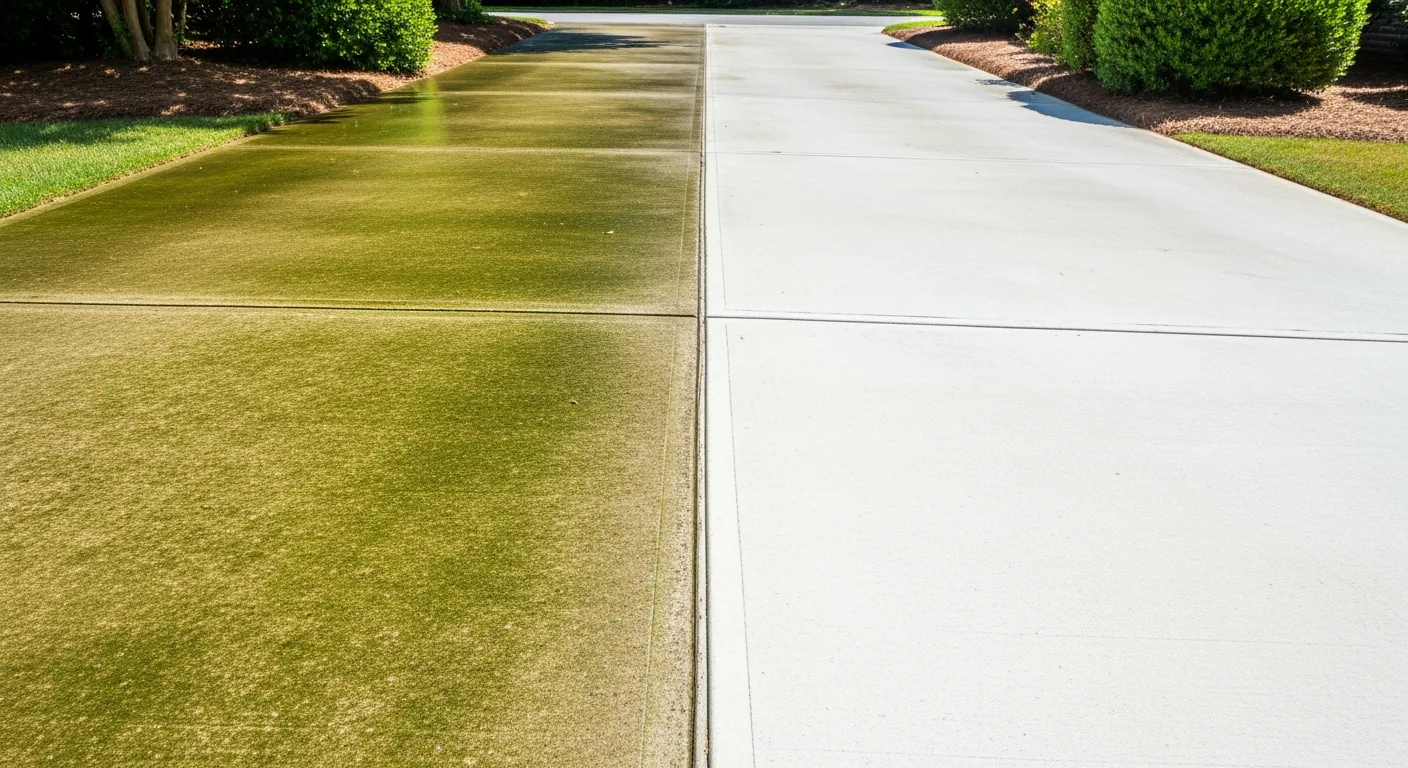
Driveways and walkways are a different story, but related. Concrete and pavers have tiny pores. Water sits inside them. On larger Forsyth County lots with heavy tree lines and shade, algae and moss get everything they need without trying. A driveway that looked fine in January can be covered in green or black growth by April. We see this pattern over and over again.
Siding sneaks up on people too. Vinyl and wood on the north or west side of your home collect moisture from afternoon shade and morning dew. It starts as a thin film you can barely see. Give it one season. That film turns into visible staining running down the surface, soaking into joints and seams.
And it doesn't just stay put. It migrates. Rain washes spores off a stained roof section onto your gutters, then down to the siding, then onto the concrete walkway at your foundation. Your whole exterior becomes one connected spread zone if the original source isn't treated. Cleaning just one surface without touching the others only slows things down. It won't stop it.
Sound familiar? The biology is simple: algae needs moisture, something to grip, and a food source. Cumming and the surrounding Forsyth County area deliver all three most of the year. But that's not a reason to throw your hands up. It's a reason to treat it the right way and stay ahead of it before your shingles, concrete, or siding start paying the price.
What Algae Damage Looks Like Before and After Professional Removal
Dark streaks running down your roof. Green patches spreading across your driveway. A black crust that gets a little bigger every season. In Cumming, GA and across Forsyth County, this is the single most common thing homeowners call us about. What you're looking at is almost always algae, and it gets uglier the longer it sits there.
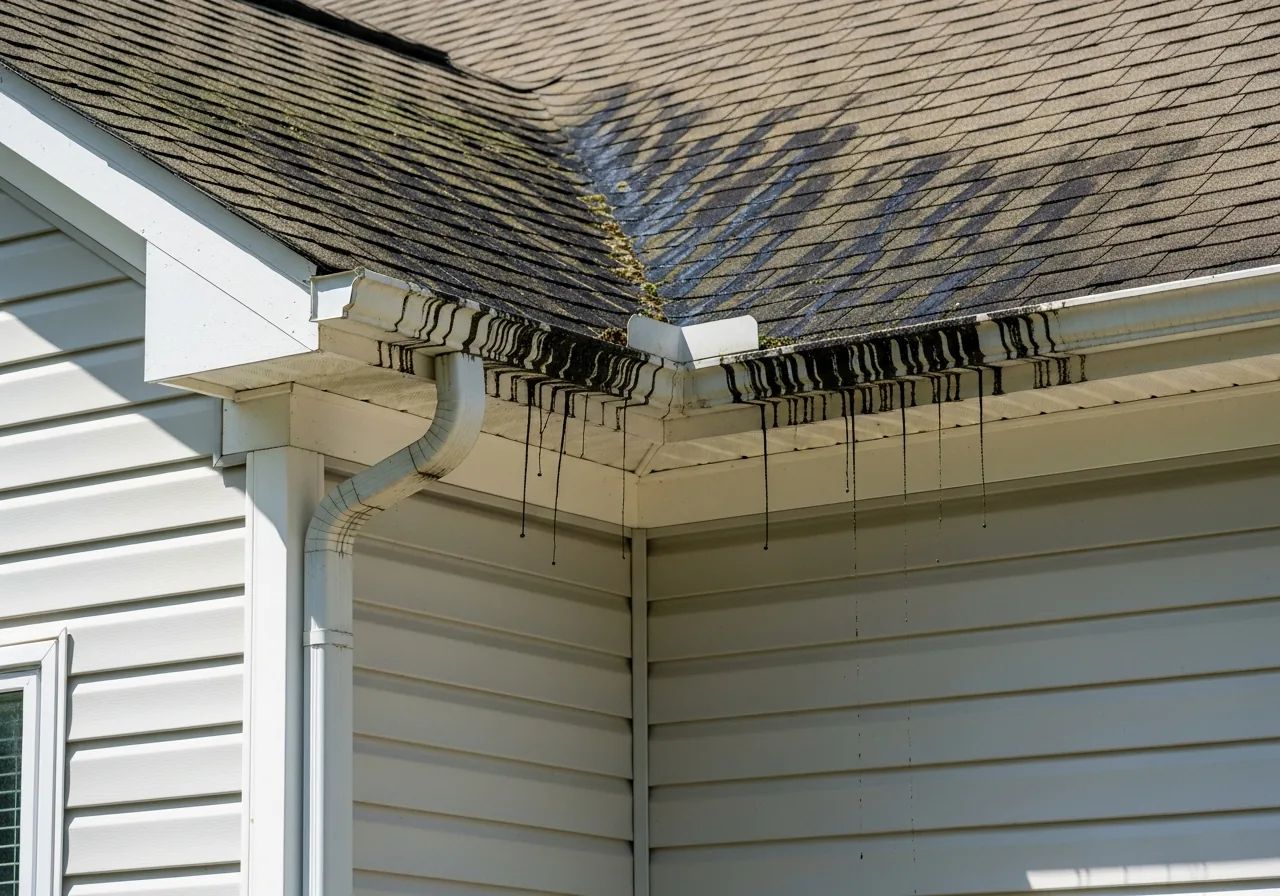
Before professional removal, algae damage has a very specific look. The most recognizable sign? Dark black or gray streaking running down roof shingles. That's Gloeocapsa magma, a cyanobacteria feeding on the limestone filler in asphalt shingles. The Asphalt Roofing Manufacturers Association points to this organism as the cause behind most dark staining on residential roofs across the Southeast.
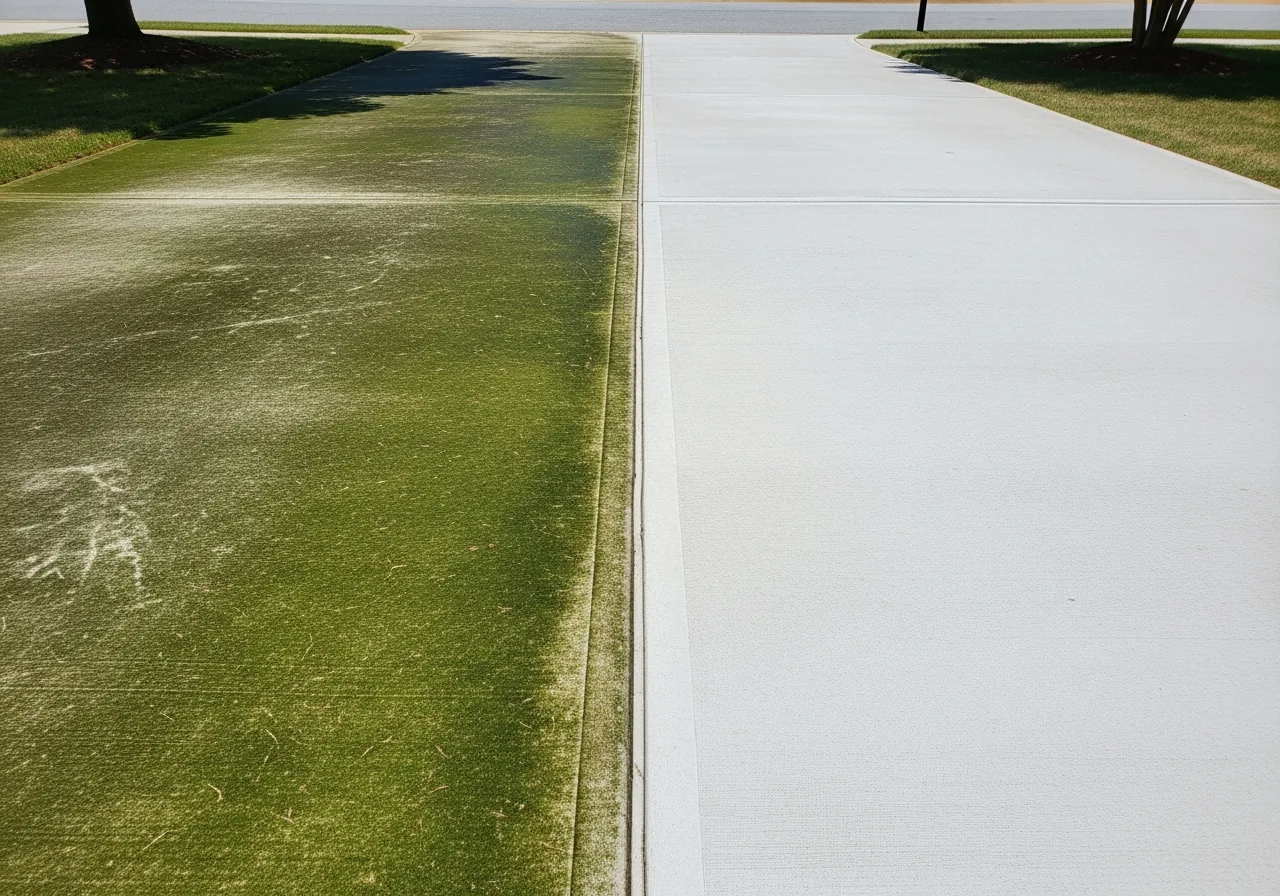
On driveways, walkways, and patios, it shows up differently. You'll feel it before you see it sometimes. A slick green or black film that makes surfaces dangerously slippery. Shaded areas under large trees or along north-facing walls tend to have thicker, darker growth. Homeowners in neighborhoods like Windermere and South Forsyth deal with this on concrete and brick constantly because of the heavy tree canopy and all that trapped moisture. We get calls about it every single week.
After a professional soft wash treatment, the streaks and staining lift from the surface. No scrubbing. No high-pressure blasting. What's left is the original color of your shingles, siding, or concrete. Often noticeably brighter than homeowners expected. A lot of our customers tell us they had no idea how much the algae had dulled their home's appearance until they saw it gone.
But the before-and-after difference isn't just about looks. Before treatment, algae traps moisture against your shingles. Over time, that accelerates the breakdown of roofing materials. Granule loss speeds up. Shingles get brittle faster. Your roof's lifespan shrinks. After removal, that moisture cycle gets interrupted. Your roof can actually dry the way it was designed to after a rainstorm.
Not sure if what you're seeing is algae, mold, or just normal weathering? We hear that question a lot, and the truth is, it doesn't really change what needs to happen next. On hardscapes like driveways and pool decks, the safety issue is real regardless. A surface covered in algae is a slip hazard, especially after rain — and it rains plenty here in Cumming, GA. After cleaning, that slick film is gone. The texture comes back. The surface works the way it should.
Exterior appearance is one of the top things buyers evaluate when forming a first impression. A roof with heavy black streaking or a driveway coated in green algae signals neglect, even if the rest of the home is in great shape. After professional algae removal, that signal flips. The home reads as cared for. Most homeowners don't realize how big the difference is until they're standing in their own driveway staring at it.
We see it all the time in Forsyth County. Homeowners who waited a season or two too long. By that point, algae's embedded deeper into porous surfaces. The staining takes more work to lift, and sometimes the underlying material has already started to break down. The before-and-after contrast is still dramatic. But catching it early gives you the cleanest, most complete result.
If your roof, driveway, siding, or walkways are showing any of these signs, what you're looking at isn't cosmetic. It's an active process working against your property right now. We see it every week across Cumming and the surrounding communities, and we know exactly what it takes to reverse it. Give us a call and we can walk you through what we're seeing and what makes sense for your situation.
How OCB Pressure Washing Performs Algae Removal in Cumming, GA Homes and Businesses
A pressure washer by itself won't fix this. High pressure can blast away surface stains while leaving the root structure of algae behind. Weeks later? The black streaks and green patches come right back. We use a soft wash method that treats algae at its source, not just what's visible on top. Our crews are licensed and insured, and we've been working Cumming, GA and Forsyth County properties long enough to know what these surfaces actually need.
Here's what happens from start to finish.
We show up and walk your entire exterior before touching anything. Surface type matters. Vinyl siding, brick, stucco, wood, composite. Each one reacts differently to cleaning solutions and water pressure, so we adjust for every surface we treat. It's not a one-size-fits-all situation and we don't treat it like one.
Once we've looked everything over, we apply a biodegradable cleaning solution directly to the algae. This solution breaks down the cell structure of the organism. It doesn't just bleach the color away. It kills the algae so regrowth takes much longer. Targeting the organism's structure — not just its surface appearance — is what separates lasting removal from temporary color correction. On siding and rooflines in Cumming, GA, where humidity hangs around all summer, this step makes a real difference in how long your results hold.
Say you've got a two-story home in a wooded part of Forsyth County. North-facing siding that never fully dries out. Black streaking that's been creeping down from the roofline for two seasons. That's one of our most common calls. After the solution dwells on the surface, we rinse using low-pressure water. This protects caulking and window seals. It also protects the landscaping around your foundation. We wet down plants and shrubs before we start and rinse them again after. Your yard shouldn't suffer because your house needed a cleaning.
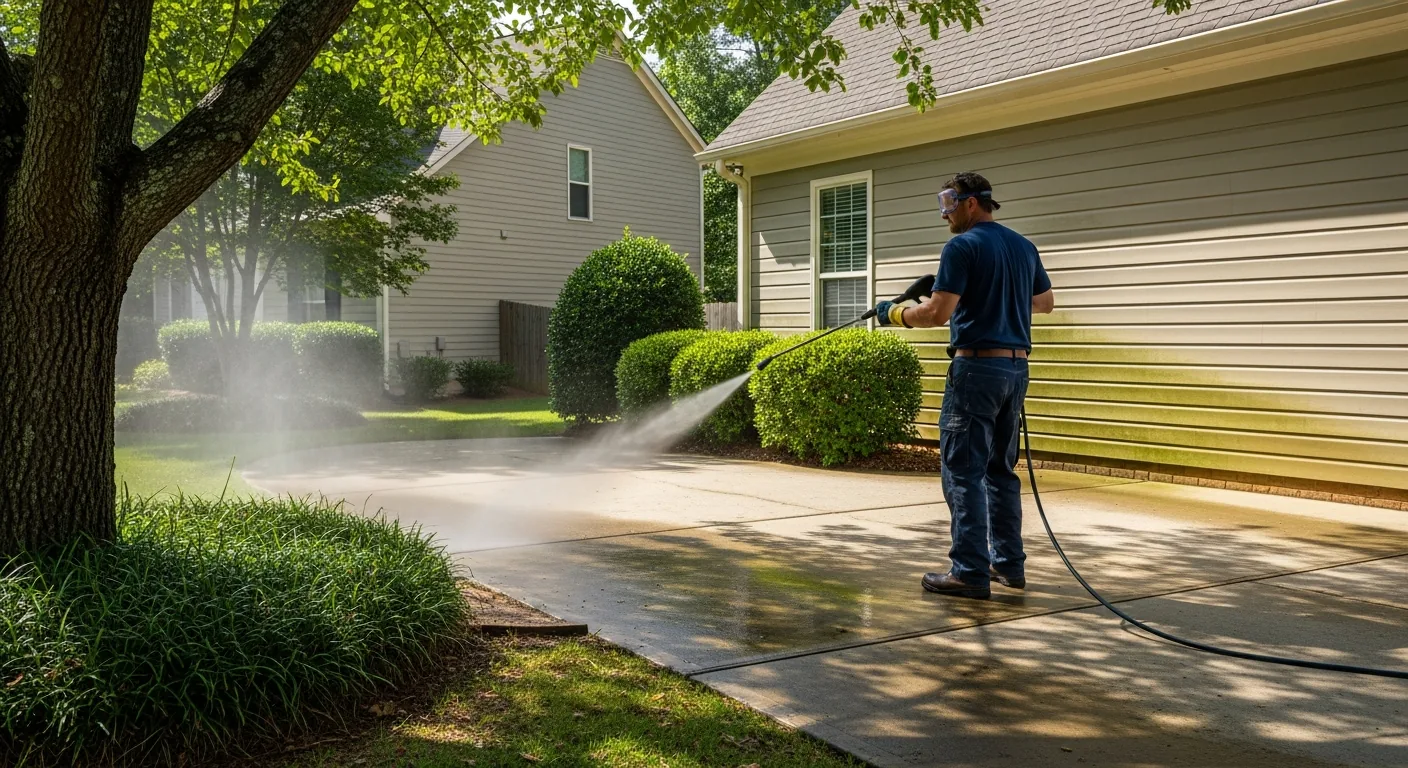
For concrete driveways, walkways, and pool decks, we bump the pressure up. Hard surfaces can handle more force. We use surface cleaner attachments that deliver even, consistent cleaning across flat areas, pulling up algae, mold, and embedded dirt without leaving streaks or uneven patches. Properties near wooded areas — and there are plenty throughout Forsyth County — tend to collect organic buildup faster on these surfaces, so thorough treatment here really matters.
Commercial properties in Cumming, GA get the same detailed approach. Storefront facades, parking structures, building exteriors. Algae on a commercial building signals neglect to customers before they ever step inside. We work around your business hours when we can to keep disruption low.
We also pay attention to spots that are easy to overlook. Roof overhangs, gutters, window frames, foundation lines. These are common places where algae takes hold first. In neighborhoods like South Forsyth, where tree canopy is dense and shade keeps surfaces damp all day, these spots need extra attention. We don't rush past them.
After the rinse, we do a walkthrough with you. We want you to see everything before we pack up. If there's a spot that needs another pass, we handle it right then. Our goal is that you feel confident in the result before we leave your property.
The equipment we use is maintained and calibrated for residential and commercial work in this region. Fiber cement siding popular in newer Cumming, GA builds, older brick on established homes, painted wood trim that needs a careful hand. We know these surface types because we work on them constantly. That local knowledge is how we protect your property while getting it clean.
So when you call us, you're not explaining your situation to someone reading off a script. You're talking to a crew that works Cumming, GA properties regularly and already knows what to expect when we pull up to your driveway. That familiarity means fewer surprises and better results every time.
Frequently Asked Questions
Common questions about algae removal in Cumming, GA
Dark black or gray streaks running down your shingles are almost always algae, not normal aging. Specifically, it's a cyanobacteria called Gloeocapsa magma feeding on the limestone in your asphalt shingles. Normal weathering looks more even and faded. Algae staining runs in streaks, usually starting near the ridge and moving down. If your home is in Cumming or anywhere in Forsyth County with mature trees nearby, algae is the most likely cause. We can confirm it on-site before any work starts.
Algae comes back because Forsyth County's climate gives it everything it needs year-round. Over 50 inches of annual rainfall, heavy tree canopy, and long stretches of humidity mean surfaces stay wet long enough for spores to take hold. Spores also travel through the air from neighboring rooftops, so even a freshly cleaned surface can pick up new growth within a season. Treating just one surface without addressing connected areas like your roof, siding, and driveway means the spread continues from an untreated source.
Yes, algae on concrete, pavers, or brick creates a slick film that becomes a serious slip hazard after rain. In Cumming, where afternoon storms are common spring through fall, a green or black-coated driveway or walkway is a real safety risk. The film is hard to see when dry and nearly invisible when wet. After a professional soft wash treatment, the texture of the surface comes back and the slip hazard is gone. This is one of the most common reasons homeowners in Forsyth County call us.
Leaving algae untreated accelerates the breakdown of your roofing materials. The growth traps moisture against your shingles, which speeds up granule loss and makes shingles brittle faster than normal. Your roof's lifespan shrinks. The Asphalt Roofing Manufacturers Association identifies Gloeocapsa magma as the leading cause of dark staining and premature shingle degradation on residential roofs across the Southeast. What starts as a cosmetic issue becomes a structural one if you give it enough seasons to grow.
When we arrive, we assess every surface before we start — including your roof, siding, and hardscapes — to see how far the growth has spread. We use a soft wash process, not high-pressure blasting, so your shingles and siding stay protected. You do not need to be home during the service, but we do ask that windows are closed and outdoor furniture is moved away from the work area. Most jobs in the Cumming and Forsyth County area are completed in a single visit. We walk the property before we leave.
Yes, heavily wooded neighborhoods like Windermere and South Forsyth tend to have more persistent algae problems because of the tree canopy. Shade keeps surfaces wet for hours longer than open areas. That extra moisture is exactly what algae needs to grow faster and spread further. Homes on north-facing lots or with large hardwoods overhanging the roofline are especially prone. We work in these neighborhoods regularly and see the same patterns every season. The biology is predictable, which means the treatment approach is too.
Related Services
What's Covered on This Page
Get Started
Get Your Free Algae Removal Estimate
No obligation. No pressure. Just a fast, honest quote for your property.
(404) 632-8810