Sidewalk Cleaning in Cumming, GA
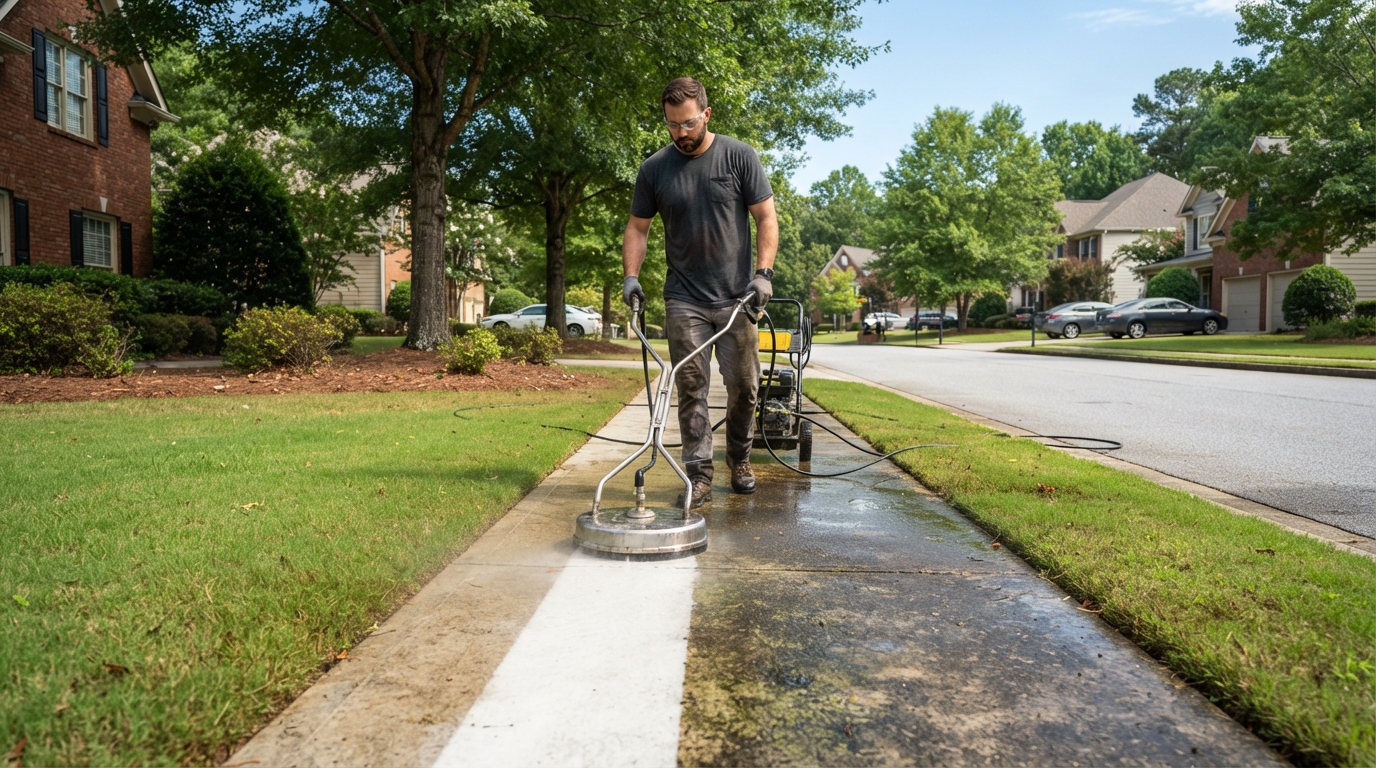
Restore concrete and paver walkways by removing algae, red Georgia clay, pollen film, and years of accumulated staining.
Why Sidewalks in Cumming Get Dirty So Fast
Take a look at your sidewalk. Go ahead, really look. Dark streaks running down the middle. Green patches creeping in from the edges. A gray film that no garden hose is going to budge. If that's what you're seeing in Cumming, GA or anywhere else in Forsyth County, you're dealing with the same thing half your neighbors are. And there are real reasons it happens so fast here.
Humidity is the biggest one. North Georgia summers run long, wet, and warm. That combo creates a perfect home for algae, mold, and mildew. These organisms latch onto concrete and spread quick. A faint green tinge in spring? By August, it's a thick, slippery coating.
Tree canopy makes it worse. Neighborhoods near Lake Lanier, older subdivisions with mature hardwoods, areas where big oaks line the street. Sidewalks in those spots stay shaded most of the day. Shade traps moisture. Moisture feeds biological growth. A sidewalk that never fully dries after a rain will develop algae and mold way faster than one sitting in full sun. And if yours runs under oaks or pines, you're also collecting a steady deposit of pollen, tannins, and sap. Those organic materials stain concrete deep and create a sticky surface that grabs even more dirt.
Pollen is no joke around here. Every spring, yellow dust blankets every outdoor surface in sight. On sidewalks, it mixes with rainwater and bakes into the concrete pores during the first warm spell. Over time, that creates a yellowish-gray stain that foot traffic grinds deeper and deeper. Atlanta consistently ranks among the worst cities in the country for pollen counts, and Cumming shares that same air mass every single spring.
We get calls about this constantly from late March through May. Homeowners tell us their sidewalk looked fine in February. By May it looks like it hasn't been touched in years. That's not neglect on your part. That's just what pollen does to concrete out here.
Red Georgia clay? Another headache unique to this region. When it rains, clay-heavy soil washes right off landscaping beds and onto sidewalk edges. That rust-colored mud dries hard and bonds to the concrete. Water alone won't rinse it off. It takes targeted pressure and the right cleaning approach to lift it without spreading the stain further.
What OCB Pressure Washing Checks Before Cleaning Your Sidewalk
Before we pull a hose or fire up a pressure washer, we walk your sidewalk. Every time. That inspection step is what separates a clean result from a damaged one. Sidewalk cleaning done wrong can etch concrete, widen cracks, or push water into places it should never go. We've seen all of that happen when prep work gets skipped.
Surface material is the first thing we look at. Most sidewalks in Cumming, GA are brushed concrete, but we also see exposed aggregate, pavers, and stamped concrete throughout Forsyth County. Each one responds differently to pressure and cleaning agents. Brushed concrete can handle more aggressive cleaning. Stamped or decorative concrete? That needs a lower PSI and a wider fan tip so we don't strip the surface pattern. We identify the material before we choose a single setting on the machine. Simple step. Skipping it causes real damage.
Then we check for existing cracks, chips, and spalling. A crack that looks minor on the surface can run deep. High-pressure water forced into a hairline crack will widen it or push moisture under the slab. We note every crack and adjust our technique around it. Sometimes we'll recommend a repair before cleaning so water doesn't work against the concrete's structure. We'd rather tell you that upfront than hand you a bigger problem after the job. That's just how we operate.
Sound familiar? A lot of homeowners call us after another company already made things worse. That's a harder fix than starting right. If you're not sure what's going on with your sidewalk, give us a call at (404) 632-8810 and we can walk through it with you.
We also check the slope and drainage direction. Water has to go somewhere. In neighborhoods around the downtown Cumming square, older sidewalks sometimes drain toward foundation edges or landscaping beds rather than away from the structure. We make sure our rinse water moves in the right direction and doesn't pool against your home or business. Facilities and property managers who handle maintenance requests for multiple buildings often flag drainage and surface maintenance as recurring priorities for exactly this reason.
Stain type matters too. We assess it before we start. Black streaks from algae need a different treatment than rust stains from irrigation overspray. Oil stains from a driveway apron bleeding onto the sidewalk require a degreaser applied at the right dwell time. Organic growth like mold, mildew, and lichen needs a low-pressure soft wash approach first, then a pressure rinse. The wrong product wastes time and can actually set the stain deeper into the concrete pores.
How the Sidewalk Cleaning Process Works in Cumming, GA
Your sidewalk has probably been collecting grime for months. Maybe years. Algae creeping in from the edges, dirt packed into every crack, oil stains spreading from the driveway toward the front walk. By the time most homeowners in Cumming, GA notice it, the buildup is thick enough to make concrete look permanently stained. And honestly? Most people wait longer than they should. By the time it's obvious, it's been a problem for a while.
Here's exactly what happens when we show up.
We start with an inspection. Before touching the surface, we walk the full length of your sidewalk looking for loose or cracked sections, deep staining, biological growth like moss or algae, and any areas where water pools. Forsyth County gets enough rainfall through spring and summer that shaded sidewalks, especially near tree lines or under overhangs, hold moisture longer than you'd think. That moisture feeds algae and mold. Knowing where it lives helps us treat it correctly instead of just blasting it with water and hoping for the best. We're fully licensed and insured, so if something unexpected comes up during that walkthrough, you're covered.
Not sure if pressure washing is even the right call for your sidewalk? That's actually pretty common. Some surfaces need a soft wash approach first. We'll tell you which one applies before we start.
Next, we choose the right pressure and technique for your specific concrete. Older concrete in established neighborhoods like South Forsyth can be more porous and more sensitive to high-pressure water than newer poured slabs. Stamped or brushed concrete requires a different nozzle angle than standard broom-finish sidewalks. We adjust our equipment before we start. Not after we've already etched a surface we can't undo.
Here's a situation we run into all the time. A homeowner notices a thick green stripe running along the shaded side of their front walkway. Slippery when wet. They've tried spraying it down with a hose twice already. Keeps coming back within a few weeks. That's algae rooted into the pores. A garden hose isn't going to touch it.
Frequently Asked Questions
Ready for Cleaner Sidewalks?
Get a free, no-obligation estimate on residential or commercial sidewalk cleaning in Cumming and Forsyth County. Family-owned. Fully insured. Trusted since 2009.