
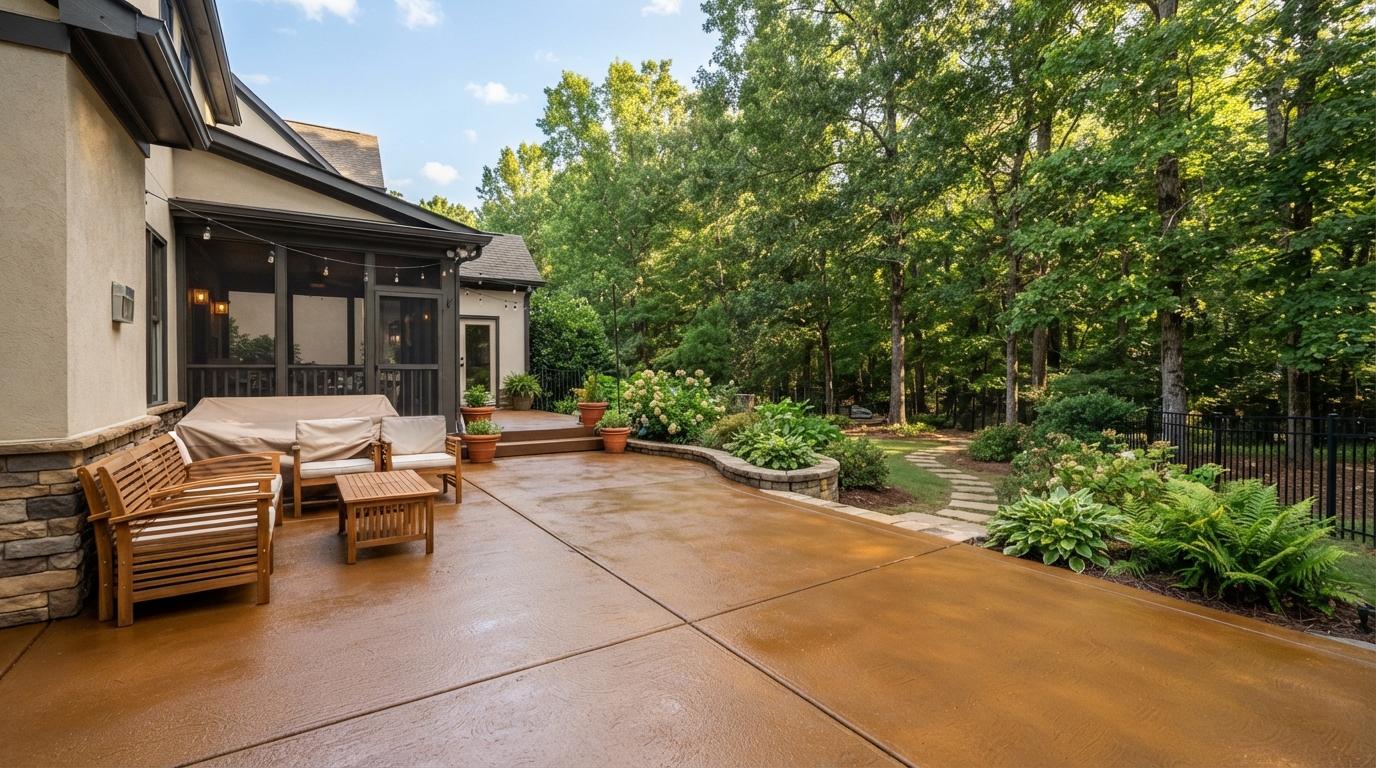
Patio Staining in Cumming, GA
Complete patio pressure washing and staining for wood and concrete patios across Cumming and Forsyth County. Restore color and protect surfaces from Georgia's humidity and UV exposure.
How to Tell Your Cumming Patio Needs Staining
Your patio is trying to tell you something. Faded boards. Blotchy concrete. That washed-out gray look that makes your whole backyard feel tired. If you're staring at a patio in Cumming, GA or anywhere across Forsyth County that doesn't look the way it used to, there's a good chance the stain has given up on you. Georgia's humid summers, heavy spring downpours, and those random January freezes create a rough environment for any outdoor surface. Knowing the warning signs helps you get ahead of the damage before it turns into a bigger project.
Go outside right now and try this. Splash a little water on the wood surface. Does it bead up? Good news, the stain's still working. But if that water soaks right in and the wood turns dark in a few seconds? The protection is gone. Your wood is drinking up moisture with nothing standing between it and the weather. Leave it like that, and you're looking at swelling, cracking, and rot down the road.
Concrete patios show wear differently. You might notice a chalky, powdery film across the surface. That's efflorescence, and it means moisture is already pushing through the slab from underneath. Uneven color is another giveaway. Darker in the low spots where water sits, lighter where it dries out fast. Homeowners in South Forsyth with newer construction patios are often shocked to see wear showing up faster than expected, but Georgia's climate is unforgiving.
Gray wood isn't just ugly. When UV rays break down the surface fibers, the wood gets more porous, more prone to splintering, and way more likely to grab onto mold and mildew spores. Cumming's humidity is basically a welcome mat for mold, especially on patios that sit in partial shade under tree canopy.
Take a close look at the edges and end grain of your boards. End grain soaks up moisture faster than any other part of the surface. Dark staining at the board ends, soft spots, fibers that are starting to lift? Water's been getting in for a while. Catch it early and you can still stain and protect what's there. Wait too long and you're replacing boards instead.
Peeling or flaking stain? That usually means the last application went on wrong. Maybe a film-forming product was used where a penetrating stain should've gone. Either way, all that peeling material has to come off before anything new can go on. Staining over peeling product just traps moisture underneath and makes everything worse.
Most exterior stains in Cumming hold up two to four years depending on sun exposure, foot traffic, and how well the surface was prepped before the last coat. Can't remember when your patio was last stained? That alone is reason enough to go take a hard look this weekend. Call us at (404) 632-8810 and we can evaluate your patio's condition before recommending anything.
Choosing the Right Stain for Cumming Wood and Concrete Patios
Georgia summers push surface temperatures way above the air temperature. Afternoon storms dump water into wood grain and concrete pores. Then winter's freeze-thaw cycles crack and lift whatever moisture got trapped inside. The stain you pick has to stand up to all of that, or you'll be doing the whole job over again in two years.
The first decision is actually pretty simple. Wood or concrete? They need completely different products. Grab a one-size-fits-all can from the hardware store and slap it on the wrong surface? That's a wasted weekend. We see this happen with Cumming homeowners more than you'd think.
For wood patios and decks, you've got three main directions:
Transparent stains show off the full wood grain and look fantastic on newer pressure-treated lumber or cedar, but they offer the least protection and need reapplying every one to two years in Georgia's climate. Semi-transparent stains hit the sweet spot for most Cumming homeowners, you still get some grain showing through, plus real UV and moisture protection that holds up two to four years before needing a refresh. Solid stains hide the grain but provide the strongest color coverage and the longest protection, sometimes five years or more, which is a good fit for older weathered patios where the wood grain is no longer part of the appeal.
Oil-based formulas soak deeper into wood fibers. That makes them a great fit for dense hardwoods or older wood that's dried out over the years. Water-based formulas are easier to clean up, dry quicker, and have gotten a lot better in durability over the past decade. In Forsyth County's heat, water-based products also tend to fight mildew better because they let the wood breathe. Whichever direction you go, matching the product to your wood type matters.
Concrete patios in neighborhoods like Bethelview or near the Lake Lanier shoreline face a different set of problems. Concrete is porous. It pulls in water, oil, and organic staining from leaves and mulch like a sponge. For concrete, you're picking between penetrating stains and film-forming sealers with color. Penetrating stains soak into the slab and become part of the surface itself. They won't peel or flake later, and they let the concrete breathe.
Acid stains create that variegated, mottled look a lot of homeowners love. They react chemically with the concrete and produce permanent color that won't fade the way topical products do. Water-based concrete stains give you more consistent color and are easier to apply if you don't have professional experience. Got existing sealers or coatings on your slab? Those have to come off before any stain can go on.
One detail that really matters here in Cumming: red Georgia clay. If your patio sits close to landscaping beds or a red clay yard, iron oxide from the soil can wick into the concrete and leave stubborn orange staining that won't scrub out. Picking a stain with a tinted base in a warm earth tone can mask that bleed-through and keep your patio looking clean all year.
Then there's sheen level. Flat finishes hide surface imperfections and look natural. Satin and semi-gloss are easier to wipe down and hold up better against foot traffic. For a patio that sees regular entertaining or outdoor furniture being dragged around, satin on concrete holds up noticeably better over time. Getting the product right before you crack open a single can is what separates a stain job that lasts from one you'll be redoing next year.
How OCB Pressure Washing Prepares and Stains Patios in Cumming, GA
Your patio's been sitting through Georgia summers, fall pollen dumps, and months of winter moisture. By the time spring hits, the concrete or wood surface is probably stained, faded, or starting to pull apart at the edges. A lot of people reach out to us after noticing their boards have gone gray, or the concrete looks almost white in spots where it used to have rich, even color. Before we put a single drop of stain on your surface, we do the prep work that most homeowners underestimate.
Every patio staining project we do in Cumming starts with a thorough pressure wash. Georgia clay, mold, algae, tannin stains from nearby trees, all of it has to come off completely. If any of that stays behind, the stain won't bond the way it should. We dial in the right pressure setting for your specific surface. Concrete gets treated one way. Wood gets treated another. Pavers are a different story entirely. Wrong pressure setting on wood can splinter fibers. Wrong setting on concrete can etch the surface. We match the method to the material every time.
After washing, we let the surface dry fully. This part takes patience. Humidity in Forsyth County can stay high even on sunny days, and rushing this step is one of the most common reasons stain jobs fail. We check moisture levels before moving forward. If the reading comes back too wet, we wait. There's no shortcut here that doesn't cost you later.
Once everything is dry, we go over the surface closely. Cracks in concrete get filled so the stain doesn't sink in unevenly. Spalling gets addressed. On wood patios, common in neighborhoods like Windermere or near the Lake Lanier shoreline, we check for soft spots, raised nails, and grain direction. All of that affects how the stain absorbs and how long it holds up.
We apply stain in controlled passes. For concrete, we typically use a pump sprayer or roller depending on the surface texture. For wood, we work with the grain using brushes or pads to push the stain into the fibers rather than letting it pool on top. Even coverage matters a lot. Lap marks and missed edges show up once the stain dries, and they're a pain to fix without stripping everything and starting over.
Depending on the product and the look you're going for, a second coat may go down after the first has cured. We time this based on temperature and humidity, both of which can shift fast in Georgia between morning and afternoon. Put a second coat on too soon and you trap moisture, which causes bubbling. We watch the conditions and adjust as we go.
After the final coat, we do a walkthrough with you before we leave. We check for thin spots, drips along the edges, anywhere the stain may have pooled. If something doesn't look right, we fix it on the spot. You should be able to see exactly where the work was done and feel good about the result.
We've worked on patios all over Cumming. Newer construction in Vickery, older homes near downtown where concrete has been in place for decades. Every surface has its own history, and we adjust our process to match what we're actually dealing with. Our crew is licensed and insured, and we've been doing this work in Forsyth County long enough to know what Georgia surfaces really need. That local experience shows up in the finished result.
Frequently Asked Questions
Ready to Bring Your Patio Back?
Get a free, no-obligation estimate on patio staining in Cumming and Forsyth County. Family-owned. Fully insured. Trusted since 2009.