
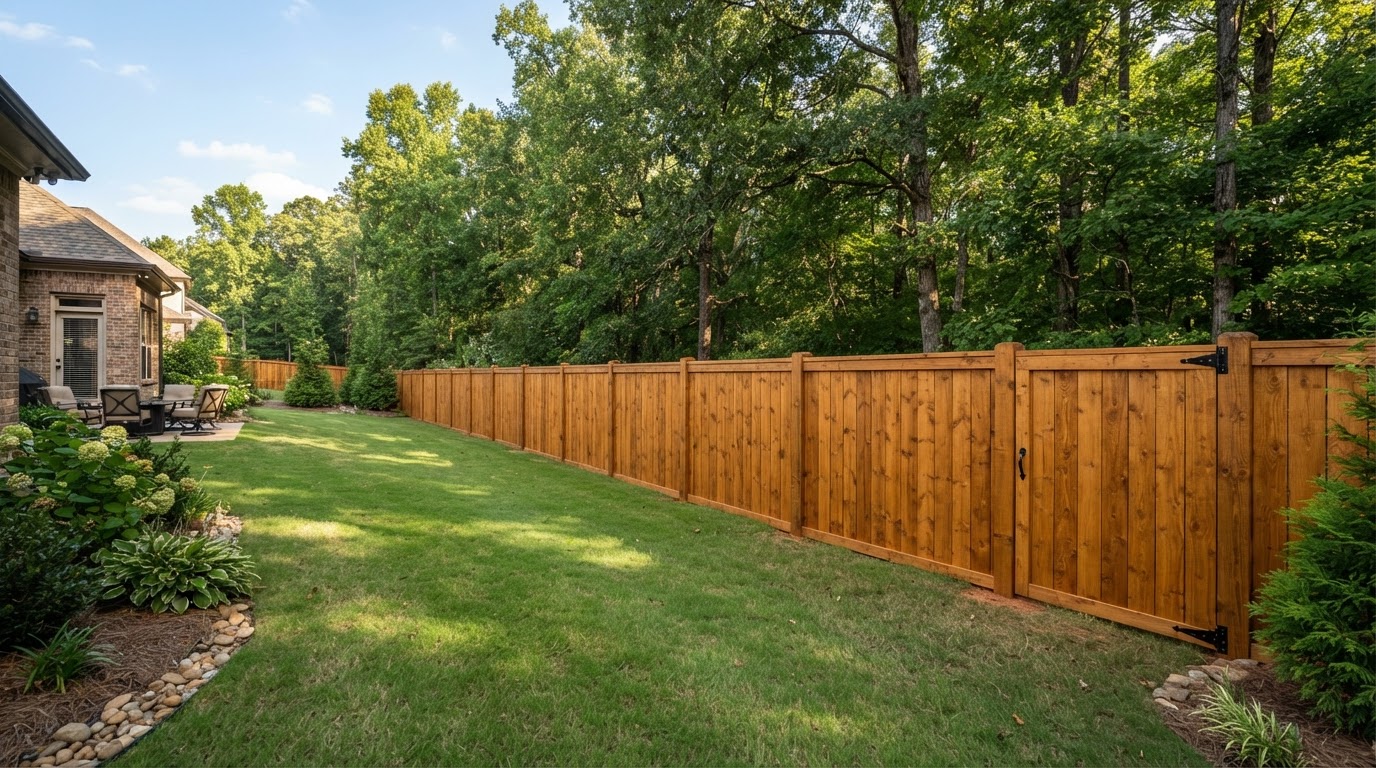
Fence Staining in Cumming, GA
Complete fence cleaning, prep, and staining for wood fences across Cumming and Forsyth County. Premium penetrating stains that protect against UV, moisture, and Georgia's humid climate.
Why Fence Staining in Cumming Is Worth Doing Now
Go look at your fence. Right now. If the wood has gone gray, feels rough to the touch, or has dark streaks running down the boards, the damage is already underway. Untreated wood in Forsyth County doesn't just sit there looking neutral. It breaks down. Fast. We see it on properties all across Cumming, GA, from newer subdivisions off Pilgrim Mill Road to those established neighborhoods near Lake Lanier. Every single day, that wood is fighting moisture, sun, and Georgia heat. And it's losing.
The climate here is brutal on fences. Summer UV exposure bleaches and dries out wood fibers. Then fall rolls in with rain, wild humidity swings, and the occasional freeze. Wet, dry, hot, cold. Over and over. That cycle tears apart unprotected wood at a cellular level. Staining puts a barrier in place that slows all of that down. Skip it, and you're basically watching your fence age on fast-forward.
Here's something most homeowners don't realize. That gray color on an old fence? It's not just ugly. It means the wood surface has oxidized and started breaking apart. Once it reaches that stage, water soaks in way more easily. Water leads to swelling, cracking, and eventually rot. And rot spreads. A fence that could've gone 15 or 20 years with proper staining might need full replacement in 8 to 10 without it. Properly maintained wood exposed to the elements can last two to three times longer than untreated wood. Two to three times. That's a big deal.
Timing matters more than most people think too. Spring and early summer are your best windows for fence staining in Cumming. The wood is dry after winter. Temperatures are moderate. You've got breathing room before July and August turn everything into an oven. Stain needs time to penetrate and cure without baking the second it hits the surface. Wait until late summer or fall, and the wood has already soaked up another season of UV damage. The curing window shrinks. If your fence is due for a coat, don't let early summer pass you by.
There's a practical angle here too. A fence that still has its structure intact, solid boards, firm posts, rails that aren't warped, is ready for staining. That's the best-case scenario. We can clean the surface, prep it properly, and apply stain that soaks in evenly. But a fence with soft spots, cracked boards, or lifted grain requires extra prep before staining can even begin. The longer you wait, the more prep it takes. Catching it early keeps the whole process straightforward. Simpler than most people expect. Until it isn't.
For homeowners in communities like Windermere or near the Cumming City Center area, curb appeal is real. Your fence is one of the first things neighbors and visitors notice. A freshly stained fence with a clean, even tone looks intentional. Cared for. A weathered, gray fence with streaks and peeling wood tells a very different story. Staining is one of the highest-return maintenance tasks you can do for the exterior of your home.
We work throughout Cumming and Forsyth County, and we see the same pattern again and again. Homeowners who stain on schedule spend less time and money over the long run. The ones who wait end up with bigger problems to solve. If your fence is showing any signs of weathering, now's the right time to get it handled before another Georgia summer does more damage.
How to Tell If Your Fence Needs Staining or Something Else
Your fence is showing its age. Maybe the color has faded to a dull gray, or the wood feels rough when you run your hand across it. Before you call anyone, it helps to know what you're actually looking at. Not every fence problem is a staining problem.
The most reliable sign that staining is the right call? Water absorption. Splash a small amount of water on the wood. If it soaks in within a few seconds, the protective coating is gone. If it beads up and rolls off, the existing stain still has some life. This simple test saves homeowners in Cumming, GA from spending money on a service they don't need yet. Takes about 30 seconds. Worth doing before you pick up the phone.
Color fading is another clear indicator. UV rays from Georgia's long, sunny summers break down stain pigments over time. When your fence goes from a rich brown or cedar tone to a washed-out gray, the protection is gone. Faded color doesn't just look bad. It means the wood fibers are exposed to moisture, mold, and rot every time it rains.
Look closely at the surface texture too. Healthy stained wood feels smooth and consistent. Wood that needs attention will feel rough, splintery, or slightly fuzzy. That texture change happens when the top layer of wood fibers starts to break down. In Forsyth County, where hot summers give way to wet fall seasons, this kind of surface degradation moves fast once it starts.
Check for dark streaks or black spots. Those are mold and mildew colonies. Not just dirt. A fence with mold growth needs more than a fresh coat of stain. It needs cleaning and treatment first. Skipping that step and staining over mold traps moisture inside the wood and makes everything worse. We always address mold before any stain goes on. Always.
We handle these situations every week. A homeowner in Windermere or South Forsyth calls because their fence looks bad. Then once we get eyes on it, the boards have pulled away from the rails or there's soft wood at the base. That's not a staining problem. Boards cracked through the full thickness. Soft spots you can press your finger into. Boards that have separated from the rails. Those are structural issues. Staining a rotted board doesn't save it. It just covers the damage for a little while. Boards in that condition need to be replaced before staining makes any sense.
Peeling or flaking is another situation that deserves a closer look. If a previous coat of stain is peeling off in sheets, that usually means the wrong product was used, or the surface wasn't properly prepped. You can't stain over peeling stain and expect it to hold. The old material has to come off first through sanding or stripping. Trying to skip that step leads to a finish that fails within one season.
The signs sort themselves into clear categories once you know what to look for. Water soaking in fast means your stain is gone and recoating is overdue. Faded or gray color means the UV protection has broken down and the wood is exposed. A rough or fuzzy surface texture means cleaning and staining are both needed. Black spots or dark streaks are mold colonies that require treatment before any stain goes on. Boards that are soft to the touch, cracked through, or pulling from the rails point to structural damage that needs repair before staining makes sense. And if existing stain is peeling or flaking, the old material has to come off through stripping and prep before a new coat will hold.
Getting this diagnosis right at the start is what separates a fence that looks great for years from one that needs to be redone in a single season. We've worked on fences all across Cumming, GA and the surrounding Forsyth County area. We know what the local climate does to wood, and how to read what a fence is actually telling you before any work begins.
Not sure which category your fence falls into? Pretty common. Most people aren't sure. Call us at (404) 632-8810 and we can take a look in person. A quick inspection answers the question fast and points you toward the right solution.
What OCB Pressure Washing Does Before Staining Your Fence in Cumming
Your fence has been sitting through Georgia summers, Forsyth County downpours, and months of humidity. Right now it probably looks gray, green, or streaked with mildew. Stain alone won't fix that. Apply stain to a dirty or wet fence and it peels, blotches, and fails within a season. The work we do before a single drop of stain touches your fence matters just as much as the stain itself.
We start with a thorough inspection of every board, post, and rail. We walk the full length of your fence and look for soft wood, cracked boards, loose nails, and any areas where moisture has already worked its way in. In neighborhoods like Windermere and South Forsyth, we see a lot of privacy fences that look solid from a distance but have early rot at the base where soil and mulch trap moisture year-round. A homeowner notices the stain looks dull and figures it just needs a fresh coat. But when we get there, the bottom foot of every other board is already soft. Catching those spots before we clean saves you from staining over a problem that'll only get worse.
Next comes the cleaning. We use a low-pressure soft wash process on wood fences. High pressure can raise the wood grain, splinter boards, and drive water deep into the fibers. All of that makes stain adhesion worse, not better. Our soft wash method uses the right cleaning solution to break down mildew, algae, dirt, and old gray oxidation without damaging the wood surface. For fences with heavy green buildup, common in shaded backyards across Cumming, we may apply a pre-treatment and let it dwell before rinsing. That dwell time does the heavy lifting so the rinse pressure stays low.
After washing, we check the wood moisture content. This step gets skipped by a lot of crews. It's one of the biggest reasons fence stain jobs fail early.
Wood needs to be at or below 15 percent moisture content before stain goes on. In Forsyth County, where we get consistent humidity and afternoon storms through spring and summer, a fence can look dry on the surface but still hold too much moisture inside the fibers. We use a moisture meter to confirm the wood is ready. If it's not, we schedule the stain application for when conditions are right. Not just when it's convenient. That's us making sure the job actually holds.
Here's something most crews skip entirely: wood brightening. A wood brightener restores the natural pH of the wood after cleaning and opens the grain so stain penetrates evenly rather than sitting on the surface. It's especially useful on older cedar and pine fences that have been weathered for several seasons. Fences in older sections of Cumming near the lake areas often have this kind of long-term sun and weather exposure, and the brightening step makes a noticeable difference in how evenly the final stain looks. We also do light sanding on fences that need it. One of those details that doesn't show up in a quote comparison but absolutely shows up in the finished result.
Finally, we protect the area around your fence before anything is applied. We cover plants, move furniture, and make sure your lawn and landscaping aren't exposed to overspray or runoff from the cleaning process. We treat your yard the same way we'd treat our own. By the time we're ready to apply stain, your fence is clean, dry, structurally sound, and prepped to hold that stain for as long as possible. OCB Pressure Washing is fully licensed and insured, and every crew member working on your property has been trained on wood-specific prep and application. Every step we take before staining is designed to make the finished result last, so you're not calling us back in a year because the stain already started failing.
Frequently Asked Questions
Ready to Restore Your Fence?
Get a free, no-obligation estimate on fence staining in Cumming and Forsyth County. Family-owned. Fully insured. Trusted since 2009.